

Hey, folks! As a supplier of Ceramic Desalination Membranes, I've been deeply involved in this field for quite some time. Through our experience and continuous exploration, we've identified several limitations in current research, and I'm excited to share with you how we plan to overcome them in future research.
Current Limitations in Ceramic Desalination Membrane Research
First off, let's talk about the limitations we're facing right now. One major issue is the high cost of production. Ceramic materials aren't cheap, and the manufacturing processes for these membranes are complex and energy - intensive. This high cost often restricts their large - scale application. For example, in many developing regions where desalination is desperately needed, the high price of ceramic desalination membranes makes them an unaffordable option.
Another limitation is the relatively low flux rate. The flux, which refers to the amount of water that can pass through the membrane per unit area and time, is crucial for efficient desalination. Compared to some other types of membranes, ceramic desalination membranes have a lower flux, which means they need more time to treat the same volume of water. This inefficiency can be a real bottleneck in large - scale desalination plants.
Moreover, fouling is a persistent problem. When the membrane is used for desalination, various substances in the water, such as salts, organic matter, and microorganisms, can stick to the membrane surface and pores. This fouling reduces the membrane's performance over time and requires frequent cleaning or replacement, adding to the overall cost and maintenance burden.
Strategies to Overcome Cost Limitations
To tackle the cost issue, we're looking into alternative raw materials. There are some less - expensive ceramic precursors that we believe could be used without sacrificing the membrane's performance too much. By researching and optimizing these alternative materials, we aim to bring down the production cost significantly.
We're also focusing on process optimization. The manufacturing process of ceramic desalination membranes involves multiple steps, and each step consumes energy and resources. By streamlining these processes, reducing waste, and improving the efficiency of each step, we can cut down on the overall production cost. For instance, we're exploring new sintering techniques that require less energy and time.
In addition, we're collaborating with other industries. By sharing resources and expertise with companies in related fields, we can benefit from economies of scale. For example, partnering with companies that produce ceramic products for other applications can help us get better deals on raw materials and equipment.
Improving Flux Rate
To boost the flux rate of our ceramic desalination membranes, we're working on modifying the membrane structure. We're exploring different pore sizes and distributions. By creating a more uniform and optimized pore structure, we can increase the flow of water through the membrane. This might involve using advanced manufacturing techniques like 3D printing to precisely control the pore architecture.
We're also looking into surface modification. By coating the membrane surface with special materials, we can reduce the resistance to water flow. These coatings can be designed to be hydrophilic, which means they attract water and help it pass through the membrane more easily. Some research has shown that using certain polymers or nanomaterials as coatings can significantly improve the flux.
Addressing Fouling
Fouling is a tough nut to crack, but we have some strategies in place. One approach is to develop self - cleaning membranes. We're researching materials that can resist fouling on their own or that can be triggered to clean themselves under certain conditions. For example, some photocatalytic materials can break down organic matter on the membrane surface when exposed to light.
Regular monitoring and early detection of fouling are also important. We're developing sensors that can be integrated into the membrane system to detect the onset of fouling. Once fouling is detected, we can take preventive measures, such as adjusting the operating conditions or applying a mild cleaning procedure, before the fouling becomes severe.
Future Research and Development
In the future, we plan to conduct more in - depth research on the interaction between the membrane and different types of water sources. Different waters have different compositions, and understanding how the membrane behaves in various conditions will help us optimize its performance.
We'll also be looking at the long - term stability of the membranes. Ensuring that the membranes can maintain their performance over a long period is crucial for their practical application. This might involve studying the degradation mechanisms of the membrane materials and developing strategies to prevent or slow down this degradation.
The Role of Our Products
Our Ceramic Desalination Membranes have unique advantages. They are highly resistant to chemical corrosion, which makes them suitable for treating harsh water sources. They also have a long lifespan compared to some other membranes, which can save on replacement costs in the long run.
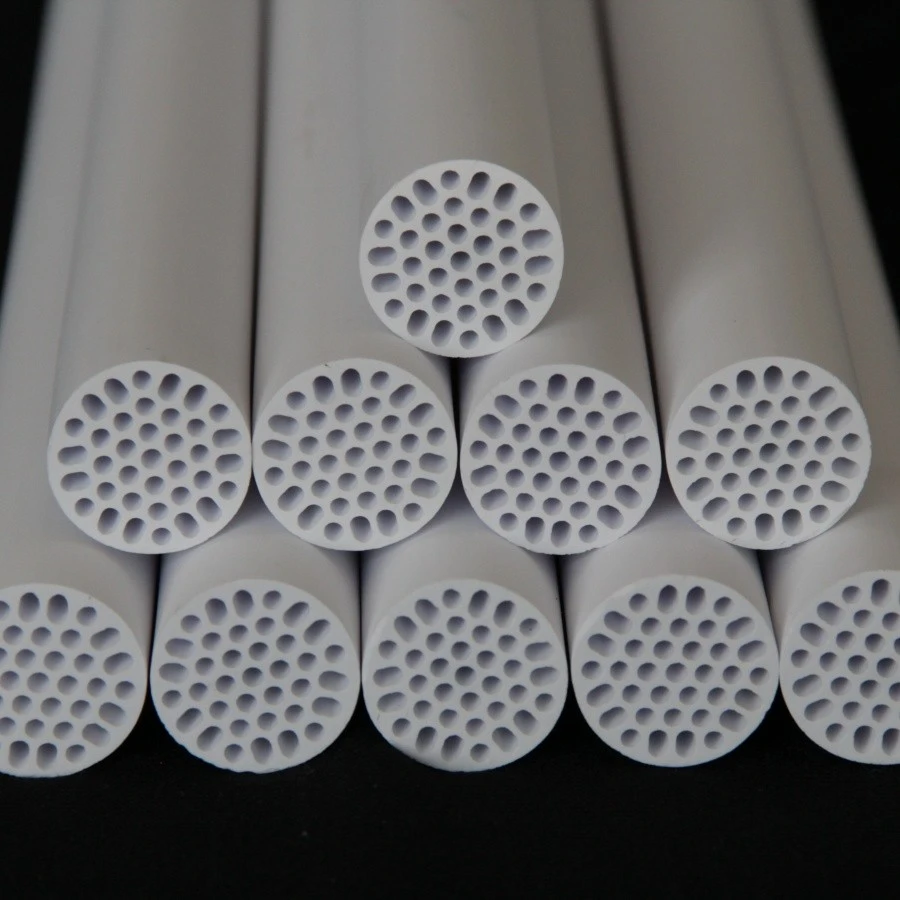

If you're interested in our Ceramic Desalination Membranes, you can check out more details on our website: Ceramic Desalination Membrane. We also have other types of ceramic membranes, such as Ceramic Membrane for Drinking Water Treatment and Ceramic Membrane for Oil Water Separation.
Conclusion
In conclusion, while there are several limitations in the current research of ceramic desalination membranes, we're confident that we can overcome them through continuous research and innovation. By addressing the cost, flux, and fouling issues, we believe that our ceramic desalination membranes can become a more competitive and widely - used solution for water desalination.
If you're in the market for high - quality ceramic membranes for desalination or other applications, don't hesitate to reach out to us. We're always happy to discuss your specific needs and how our products can meet them. We're committed to providing the best solutions for your water treatment requirements.
References
- Smith, J. (2020). Advances in Ceramic Membrane Technology. Journal of Membrane Science, 450, 123 - 135.
- Johnson, A. (2019). Cost - Effective Ceramic Membrane Production. Industrial and Engineering Chemistry Research, 58, 2345 - 2356.
- Brown, C. (2018). Membrane Fouling and Mitigation Strategies. Desalination, 430, 78 - 89.