

Commercial RO System Manufacturer & Supplier - Taihe
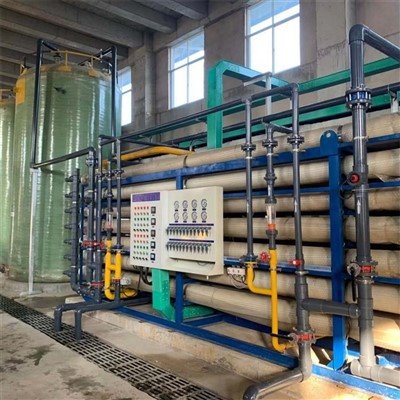
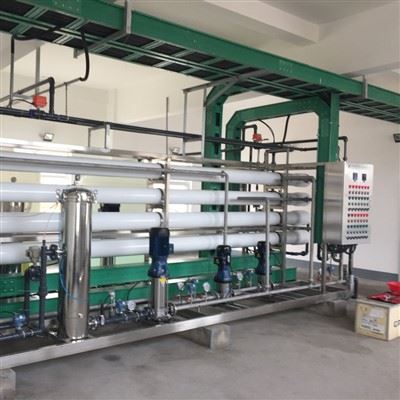
Taihe manufactures high-performance commercial reverse osmosis systems engineered for purified water production, process water, food and beverage manufacturing, equipment cleaning, and steam generation. Every system is custom-configured based on exact feed-water chemistry and permeate requirements, ensuring seamless integration from water analysis and equipment fabrication to final inspection and global shipment.



Why Choose Taihe
Established Manufacturing Experience
Operating since 1998, Taihe manages an in-house production lifecycle covering system development, precision fabrication, assembly, and rigorous pre-shipment testing.
Project-Based Customization
Systems are engineered around real-world feed-water profiles and permeate demands rather than relying on rigid, one-size-fits-all nominal capacities.
Integrated Skid Assembly
Pretreatment components, high-pressure pumps, membrane vessels, piping, and controls are compactly integrated onto a single professional skid.
Certified Quality Management
Backed by globally recognized ISO 9001 (Quality), ISO 14001 (Environmental), and ISO 45001 (Occupational Health & Safety) certifications.
Technical Specifications
|
Parameter |
Standard Commercial Range |
High-Capacity Range |
|
Flow Rate Capacity |
1,000 – 10,000 GPD |
15,000 – 50,000+ GPD |
|
Salt Rejection Rate |
95.0% – 98.5% |
98.0% – 99.5% |
|
Hydraulic Recovery |
50% – 65% |
65% – 75% (with concentrate loop) |
|
Operating Pressure |
150 – 200 PSI |
200 – 250 PSI |
|
Membrane Elements |
4-inch Spiral-Wound |
8-inch Spiral-Wound |
|
Electrical Supply |
220V/380V, 50/60Hz, 3-Phase |
380V/415V, 50/60Hz, 3-Phase |
Core System Architecture
Pretreatment Section
Protects RO membranes from suspended solids, scaling, and organic fouling using customized filtration, softening, or chemical conditioning.
High-Pressure Pumping
Employs heavy-duty industrial pumps engineered to match membrane resistance and required permeate output.
Membrane Separation Stage
The core separation zone where semi-permeable membranes split feed water into high-purity permeate and concentrated wastewater.
Instrumentation & Control
Features real-time flow meters, pressure gauges, conductivity sensors, and an automated PLC control cabinet for seamless operation.
Application Scenarios

-
Food & Beverage Production
Supplies reliable, high-purity water for ingredient preparation, sanitation, and equipment cleaning processes.
-
Steam Generation & Boilers
Delivers treated feedwater with ultra-low dissolved mineral content to prevent scaling and extend boiler lifespan.
-
Commercial Facilities & Process Water
Serves hotels, commercial complexes, and manufacturing lines requiring consistent, controlled water quality.
-
Laboratory & Technical Use
Provides dependable, purified water sources tailored to strict, defined technical specifications.
Water Production Capacity Tiers
Small Scale (1,000 – 5,000 GPD)
Suited for small laboratories, dental clinics, coffee chains, and light commercial applications requiring modest continuous output.
Medium Scale (10,000 – 25,000 GPD)
Deployed in medium-sized hotels, commercial laundries, car wash facilities, and light industrial manufacturing lines.
Large Scale (30,000 – 50,000+ GPD)
Engineered for bottling plants, municipal auxiliary stations, district heating plants, and high-demand commercial complexes.
Water Purification Process Flow
Pre-Filtration Stage: Multi-media sand and activated carbon filters remove suspended solids, turbidity, free chlorine, and organics to protect downstream membranes.
Antiscalant Dosing Stage: Automated chemical dosing injects precise antiscalant quantities to inhibit mineral scale formation on membrane surfaces.
High-Pressure Pumping Stage: Vertical multistage centrifugal pumps elevate feed pressure to overcome osmotic pressure across the membrane barrier.
Membrane Separation Stage: Semi-permeable polyamide membranes split feed water into purified low-TDS permeate and concentrated waste streams.
Post-Treatment & Control: Permeate passes through UV sterilization or pH adjustment units, governed by an automated PLC monitoring conductivity and pressure thresholds.

System Selection Guide
Analyze Raw Water Quality
Review laboratory water reports covering Total Dissolved Solids (TDS), hardness, silica, iron, manganese, and silt density index (SDI).
Calculate Flow Demands
Determine peak hourly demand, daily consumption volumes, and operational hour constraints to select the correct GPD capacity.
Verify Site Utilities
Measure available floor space, verify doorway clearance for skid entry, and confirm local electrical power availability.
Specify Material Grades
Choose 304 or 316L stainless steel piping and components based on purity requirements and environmental corrosiveness.
Installation & Routine Maintenance

Pre-Commissioning Checks
Verify all feed connections, permeate lines, concentrate drainage, electrical wiring, pump rotation, and control cabinet logic prior to startup.

Routine Operating Checks
Regularly monitor operating pressures, flow rates, permeate conductivity, pressure drops across filters, and chemical dosing performance.

Membrane Cleaning & Upkeep
Perform scheduled chemical cleanings (CIP) whenever operating logs indicate a drop in membrane performance or rising pressure differentials.
Customization Options
Structural Materials
Upgrade from powder-coated carbon steel frames to full 304 or 316 stainless steel structural skids and high-pressure piping.
Control Architecture
Selection of relay logic, programmable logic controllers (PLC) with touchscreen HMI, or Modbus/Ethernet protocols for SCADA integration.
Pre-Treatment Integration
Integration of water softeners, iron removal filters, ultrafiltration (UF) modules, or automated dosing skids onto the main frame.
Instrumentation Packages
Addition of redundant inline TDS meters, digital flow totalizers, digital pressure transducers, and automatic flush valves.
Quality Inspection Standards
Hydrostatic Pressure Testing
Every assembled pressure vessel array and high-pressure piping network undergoes hydraulic leak testing at 1.5 times operating pressure.
Electrical Safety Verification
Insulation resistance testing, ground continuity checks, and panel wiring verification performed to international electrical standards.
Factory Wet Testing
Systems are connected to test water supplies to verify pump operational stability, flow meter accuracy, automation responses, and permeate conductivity benchmarks prior to crating.
Frequently Asked Questions

Reques a Quote for Your Commercial RO System
Send the following information for an initial system configuration:
Feed-water source
Water analysis
Required permeate capacity
Required product-water quality
Daily operating hours
Installation space
Power supply
Feed-water pressure
Application
Pretreatment requirements
Delivery requirements
As one of the most professional commercial ro system manufacturers and suppliers in China, we're featured by quality products and good price. Please rest assured to buy customized commercial ro system from our factory.