


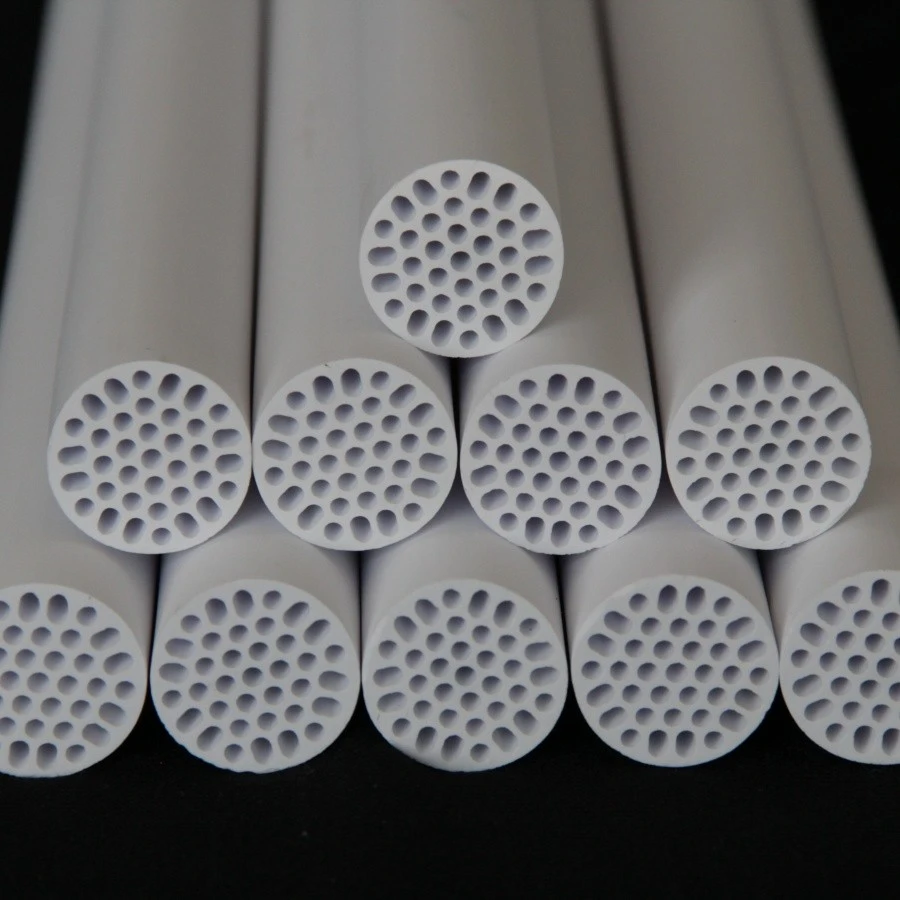


What is ceramic desalination membrane?
In ceramic ultrafiltration for seawater desalination, CERAMEMBR® ceramic desalination membrane can remove salts, suspended solids, bacteria, and other contaminants from seawater or brackish water, and produce fresh water, used to drinking, irrigation, industry etc. CERAMEMBR® ceramic membrane is made from alumina, zirconia, titanium dioxide, these materials are highly resistant to high temperatures, chemical corrosion, and physical wear, and do not release harmful particles to the purified water, unlike polymer-based membranes will leach plasticizers.
In the filtration process, seawater pass through tubular ceramic membrane under pressure, the structure of the ceramic allows water molecules to pass through, trapping larger molecules, including salts and pathogens, blocking them in the pores.
CERAMEMBR® ceramic membranes technical parameters
|
Model |
Application |
Length |
Filtration area |
Pore size |
|
CM-120 |
Drinking Water |
1500mm |
28㎡ |
30nm |
|
CM-121 |
High Brine water |
1500mm |
28㎡ |
30nm |
|
CM-122 |
Reclaimed water |
1500mm |
28㎡ |
30nm |


Advantages of ceramic desalination membranes
Durability and Longevity:Ceramic materials are known for their strength and resistance to wear and tear. Unlike polymer-based membranes, which degrade over time due to exposure to chlorine, high pressures, and other environmental factors, CERAMEMBR® ceramic desalination membranes can serve much longer time under similar conditions, 20 years can be confirmed. This durability leads to lower maintenance costs and reduces the need for frequent replacement.
Resistant to extreme temperatures and chemicals:Ceramic membranes have ability to withstand extreme temperatures and aggressive chemicals. Seawater desalination often involves high-pressure systems and the use of chemicals, including cleaning agents and antifoulants, which can damage traditional polymer-based membranes. CERAMEMBR® ceramic desalination membrane is not affected by these stresses, ensuring stable performance and extending the life of the system.
Fouling reduction:Membrane fouling is a significant challenge in desalination. Salts, organic materials, and microorganisms accumulating on the surface of the membrane, result in the system efficiency reduction and higher energy consumption. Ceramic desalination membrane is less prone to fouling due to smooth, rigid surface unlike organic membrane. Additionally, ceramic membranes can be cleaned more effectively, reducing downtime and operational costs.
Energy Efficiency:While ceramic desalination membranes are typically used in pre-treatment filtration for reverse osmosis system, their higher resistance to fouling and wear can make them more energy-efficient over time. Since they require less frequent cleaning and maintenance, these systems can operate at lower pressures and reduce energy cost in comparison to conventional desalination technologies.
Sustainability:Porous ceramic membrane is made from abundant and non-toxic materials such as silica, alumina, and zirconia, which are environmentally friendly compared to the polymers used in conventional membranes. Furthermore, the durability and less replacement take lower environmental impact over the ecosystems cycle.
Hot Tags: ceramic desalination membrane, China ceramic desalination membrane manufacturers, suppliers, alumina membranes, ceramic reverse osmosis membrane, ceramic microfiltration, Ceramic Ultrafiltration for Seawater Desalination, ceramic uf membrane, ceramic membrane price