

Ultrafiltration is a pressure-driven membrane separation process that has gained significant popularity in various industries due to its ability to separate and purify substances based on molecular size. As a leading supplier of ultrafiltration systems, I am often asked about the components that make up these systems. In this blog post, I will delve into the key components of an ultrafiltration system, their functions, and how they work together to ensure efficient and reliable operation.
1. Feed Pump
The feed pump is the heart of the ultrafiltration system. Its primary function is to deliver the feed solution, which contains the substances to be separated, to the ultrafiltration membrane at the required pressure. The pump must be capable of generating sufficient pressure to overcome the resistance of the membrane and maintain a steady flow rate. There are several types of pumps that can be used in ultrafiltration systems, including centrifugal pumps, positive displacement pumps, and diaphragm pumps. Centrifugal pumps are commonly used due to their high flow rates and relatively low cost. However, positive displacement pumps, such as piston pumps or gear pumps, are preferred when precise flow control and high pressure are required.
2. Ultrafiltration Membrane
The ultrafiltration membrane is the most critical component of the system. It is a semi-permeable barrier that allows the passage of small molecules and solvents while retaining larger molecules and particles. The membrane is typically made of polymeric materials, such as polysulfone, polyethersulfone, or polyvinylidene fluoride (PVDF). These materials offer excellent chemical resistance, mechanical strength, and thermal stability.
The performance of the ultrafiltration membrane is characterized by its molecular weight cut-off (MWCO), which is the size of the smallest molecule that the membrane can retain with a specified rejection rate. For example, a membrane with a MWCO of 10,000 Daltons will retain molecules larger than 10,000 Daltons while allowing smaller molecules to pass through. The choice of membrane MWCO depends on the specific application and the size of the target molecules to be separated.
Membranes can be configured in different geometries, such as flat sheets, hollow fibers, or spiral wound modules. Hollow fiber membranes are widely used in ultrafiltration systems due to their high surface area-to-volume ratio, which allows for a compact design and high flux rates.
3. Membrane Module
The membrane module is a housing that contains the ultrafiltration membrane. It provides a physical structure to support the membrane and allows for the efficient flow of the feed solution and the permeate. There are several types of membrane modules available, including tubular, plate-and-frame, and spiral wound modules.
Tubular modules consist of a series of tubes with the membrane coated on the inner surface. The feed solution flows through the tubes, and the permeate is collected on the outside of the tubes. Tubular modules are suitable for applications with high suspended solids or viscous feed solutions, as they are less prone to fouling.
Plate-and-frame modules consist of a stack of flat membrane sheets separated by spacers. The feed solution flows between the membrane sheets, and the permeate is collected through channels in the spacers. Plate-and-frame modules are easy to clean and maintain, making them suitable for applications where frequent membrane cleaning is required.
Spiral wound modules consist of a spiral-wound membrane envelope that is wrapped around a central perforated tube. The feed solution flows axially through the membrane envelope, and the permeate is collected in the central tube. Spiral wound modules are compact and have a high surface area-to-volume ratio, making them suitable for applications with low suspended solids and high flux requirements.
4. Pressure Vessel
The pressure vessel is a container that houses the membrane module. It is designed to withstand the high pressures generated by the feed pump and to protect the membrane module from external damage. The pressure vessel is typically made of stainless steel or fiberglass-reinforced plastic (FRP).
The pressure vessel is equipped with inlet and outlet ports for the feed solution, permeate, and retentate. It also has pressure gauges and valves to monitor and control the pressure and flow rates of the system.
5. Control System
The control system is responsible for monitoring and controlling the operation of the ultrafiltration system. It includes sensors, controllers, and actuators that work together to maintain the desired operating conditions, such as pressure, flow rate, and temperature.
The sensors measure various parameters, such as pressure, flow rate, temperature, and conductivity, and send the signals to the controller. The controller processes the signals and compares them to the setpoints. If the measured values deviate from the setpoints, the controller sends signals to the actuators to adjust the operating conditions.
The actuators include valves, pumps, and heaters that are used to control the flow rates, pressure, and temperature of the system. For example, if the pressure in the system exceeds the setpoint, the controller will send a signal to the pressure relief valve to open and release the excess pressure.
6. Backwash System
The backwash system is used to clean the ultrafiltration membrane and remove the accumulated fouling materials. Fouling is a major problem in ultrafiltration systems, as it can reduce the membrane flux and increase the operating pressure. The backwash system typically consists of a backwash pump, valves, and a backwash tank.
During the backwash process, the flow of the feed solution is reversed, and a clean solution, such as water or a cleaning agent, is pumped through the membrane in the opposite direction. This helps to dislodge the fouling materials from the membrane surface and flush them out of the system. The backwash frequency and duration depend on the type of feed solution, the membrane material, and the operating conditions.
7. Chemical Cleaning System
In addition to backwashing, chemical cleaning may be required to remove stubborn fouling materials from the membrane surface. The chemical cleaning system typically consists of a chemical storage tank, a dosing pump, and valves.

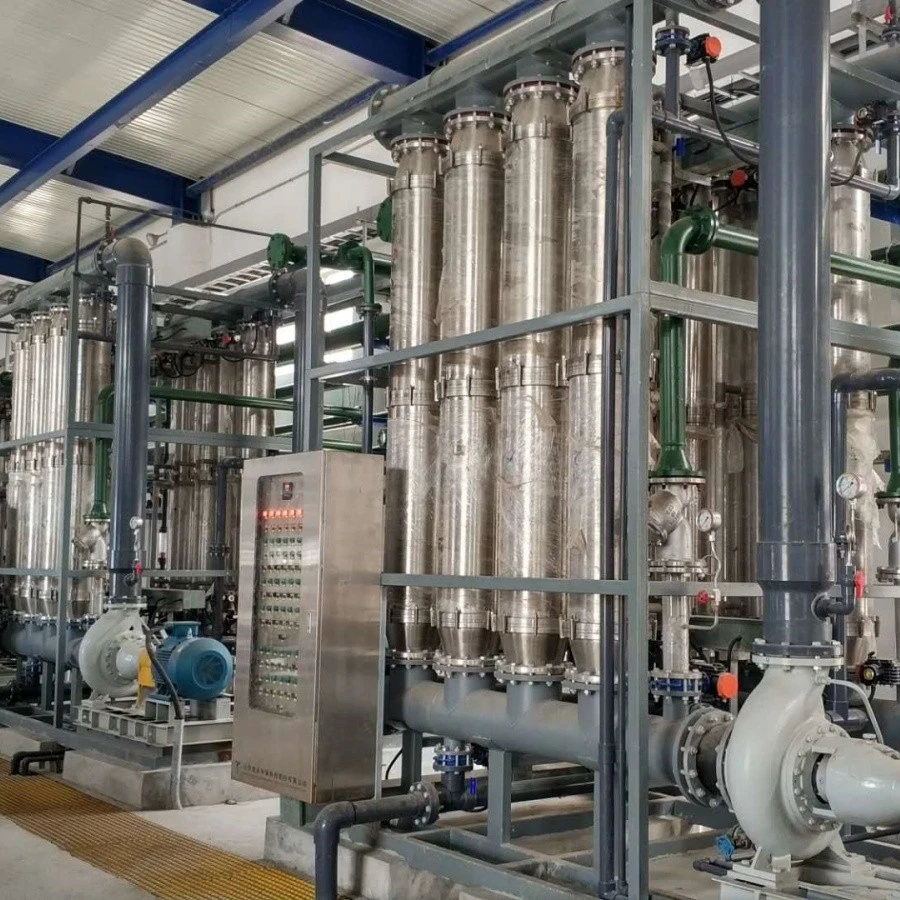
The chemical cleaning solution is prepared in the chemical storage tank and then pumped into the ultrafiltration system using the dosing pump. The cleaning solution is circulated through the membrane module for a specified period of time to dissolve and remove the fouling materials. After the cleaning process, the system is rinsed with clean water to remove the residual cleaning solution.
8. Permeate and Retentate Collection Systems
The permeate and retentate collection systems are used to collect and store the permeate and retentate, respectively. The permeate is the purified solution that passes through the membrane, while the retentate is the concentrated solution that is retained by the membrane.
The permeate collection system typically consists of a permeate tank and a pump. The permeate is collected in the permeate tank and then pumped to the next stage of the process or to the storage tank.
The retentate collection system typically consists of a retentate tank and a pump. The retentate is collected in the retentate tank and then either recycled back to the feed tank or disposed of, depending on the specific application.
Applications of Ultrafiltration Systems
Ultrafiltration systems have a wide range of applications in various industries, including:
- Food and Beverage Industry: Ultrafiltration is used in the food and beverage industry for the clarification, concentration, and purification of various products, such as milk, fruit juices, beer, and wine. For more information on ultrafiltration in the food industry, please visit Ultrafiltration in Food Industry.
- Water Treatment: Ultrafiltration is used in water treatment plants for the removal of suspended solids, bacteria, and viruses from drinking water. It is also used in wastewater treatment plants for the treatment of industrial and municipal wastewater. For more information on ultrafiltration drinking water systems, please visit Ultrafiltration Drinking Water System.
- Pharmaceutical and Biotechnology Industry: Ultrafiltration is used in the pharmaceutical and biotechnology industry for the purification and concentration of proteins, enzymes, and other biomolecules. It is also used in the production of vaccines and other biopharmaceutical products.
- Industrial Processes: Ultrafiltration is used in various industrial processes, such as the separation of oil and water, the recovery of valuable metals, and the purification of chemicals. For more information on industrial ultrafiltration systems, please visit Industrial Ultrafiltration Systems.
Conclusion
In conclusion, an ultrafiltration system consists of several key components, including the feed pump, ultrafiltration membrane, membrane module, pressure vessel, control system, backwash system, chemical cleaning system, and permeate and retentate collection systems. These components work together to ensure the efficient and reliable operation of the system.
As a supplier of ultrafiltration systems, we offer a wide range of products and services to meet the specific needs of our customers. Our ultrafiltration systems are designed to provide high performance, reliability, and ease of operation. If you are interested in learning more about our ultrafiltration systems or would like to discuss your specific application, please feel free to contact us for a consultation. We look forward to working with you to find the best ultrafiltration solution for your needs.
References
- Cheryan, M. (1998). Ultrafiltration and Microfiltration Handbook. Technomic Publishing Company.
- Mulder, M. H. V. (1996). Basic Principles of Membrane Technology. Kluwer Academic Publishers.
- Porter, M. C. (1997). Handbook of Industrial Membrane Technology. Noyes Publications.