

In our daily production and lives, a seemingly unremarkable material is playing an increasingly vital role-the "membrane." From a glass of pure drinking water to material purification in industrial production, membrane technology is ubiquitous. Among the wide variety of membrane materials, inorganic ceramic membranes are distinguishing themselves from numerous alternatives with their unique performance advantages, becoming a strategic focus for the future development of China's membrane industry.
► Ceramic Membranes: More Than Just "Filter Cartridges," They Are "Special Forces" for Harsh Environments
When we discuss membrane separation, many people think of household water purifier filter cartridges, which mostly fall into the category of organic membranes. However, in many industrial application scenarios, the environmental conditions are far more severe than those in daily life, providing an ideal stage for ceramic membranes to demonstrate their capabilities.
► Inherent Advantages Establish a Core Position
Compared to traditional organic membranes, the core advantage of ceramic membranes lies in their exceptional stability. Firstly, they possess outstanding chemical stability, remaining unaffected in environments with strong acids or alkalis. This gives them an incomparable advantage when treating highly corrosive industrial wastewater. Secondly, high-temperature resistance is another of their key strengths. In many chemical and pharmaceutical processes that require high-temperature operation or disinfection, organic membranes often fail, whereas ceramic membranes can operate stably.
Furthermore, they are robust and durable with high mechanical strength, capable of withstanding higher operating pressures and physical abrasion, which also results in a longer service life. This "robust" characteristic translates to lower replacement frequency and maintenance costs, a huge draw for industrial sectors that pursue long-term, stable operation.
► Continuously Expanding Application Fields, from Water Treatment to High-Tech Industries
Based on these inherent advantages, the application landscape for ceramic membranes is rapidly expanding. Initially, they made their mark in the water treatment sector, where various advanced ceramic membranes for water treatment technologies were developed for treating special wastewater, such as those with high suspended solids, high salinity, or oil content.
Today, their presence can be found across multiple key sectors of the national economy. In the petrochemical industry, the ceramic membrane for oil water separation, with its hydrophilic and oleophobic properties, has efficiently solved the challenge of treating oily wastewater. In the food & beverage and biopharmaceutical industries, ceramic membranes can withstand frequent chemical cleaning and steam sterilization, ensuring the hygiene and safety of production processes. As the technology continues to mature, higher-precision products like the ceramic ultrafiltration membrane are playing a key role in material concentration and purification.
Even more exciting is that the application of ceramic membranes is no longer limited to traditional industries but is extending into high-value-added sectors such as semiconductors and new energy, becoming one of the key supporting materials driving the development of these emerging fields.
► Industrial Upgrading and Favorable Policies: A Dual-Engine for Development
The reason ceramic membranes have become a focal point for industrial development is due not only to their own technological advantages but also to external environmental drivers.
► Independent Technological Innovation, Breaking Developmental Bottlenecks
In the past, high-performance ceramic membrane technology was, to some extent, reliant on external sources. However, in recent years, China has made significant progress in areas such as material research and development, fabrication processes, and equipment manufacturing for ceramic membranes, achieving continuous breakthroughs in core technologies. From laboratory samples to industrial-scale production, China has now mastered the entire process. Classic products like the tubular ceramic membrane have also become increasingly mature in design and manufacturing. This technological self-sufficiency not only reduces application costs but also clears the obstacles for widespread adoption, thereby enhancing its competitiveness in the Chinese market.
► Aligning with National Strategy, Ushering in New Opportunities
Currently, China is in a critical period of industrial transformation and upgrading and the pursuit of high-quality development, where "green, environmentally friendly, and efficient" have become strict requirements for industrial production. The long service life, high efficiency, and relatively low energy consumption of ceramic membrane technology are highly aligned with the national strategy of energy conservation and environmental protection. Against the backdrop of "carbon peaking and carbon neutrality," their value in industrial energy saving and emission reduction, as well as water resource recycling, will become increasingly prominent. The national strategic emphasis on new materials and the environmental protection industry provides strong policy support and vast market space for the development of the ceramic membrane industry.
► Future Outlook: Broader Application Scenarios and Challenges
Looking ahead, the application prospects for ceramic membranes remain vast. In terms of safeguarding public welfare, high-performance ceramic membrane for drinking water treatment will provide residents with safer and healthier drinking water. On the strategic level of water resources, while the direct application of a ceramic desalination membrane is still under exploration, its role as a core component in the pretreatment stage of seawater desalination is significant, as it can markedly improve the stability and efficiency of subsequent treatment systems, demonstrating immense potential.
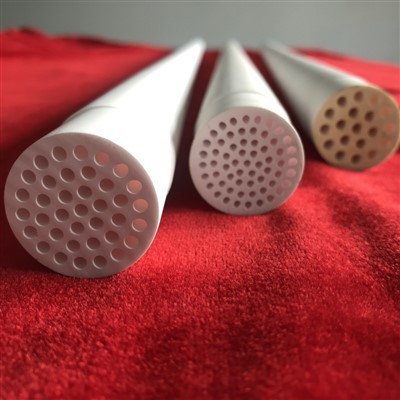


Of course, the development of the ceramic membrane industry also faces challenges, such as the need to further reduce manufacturing costs and improve separation precision. However, it is foreseeable that with continuous technological iteration and the ongoing improvement of the supply chain, ceramic membranes will undoubtedly demonstrate their irreplaceable value in more fields. They are set to become a backbone force driving China's green industrial transformation and technological upgrading, and their strategic key position will become even more solidified.