

Urgency of the Middle East Water Crisis
The Middle East faces persistent environmental challenges, including extreme aridity, scarce rainfall, and high evaporation rates. Surging populations and rapid urbanization have exacerbated the freshwater supply-demand gap-Saudi Arabia and the UAE now require over 50% more freshwater for domestic and industrial use than conventional sources can provide. While desalination has become a core solution, traditional polymer membranes are prone to corrosion under high-temperature, high-salinity conditions, leading to frequent downtime and exorbitant maintenance costs. Ceramic desalination membranes now emerge as a transformative innovation for stable, low-cost freshwater production.
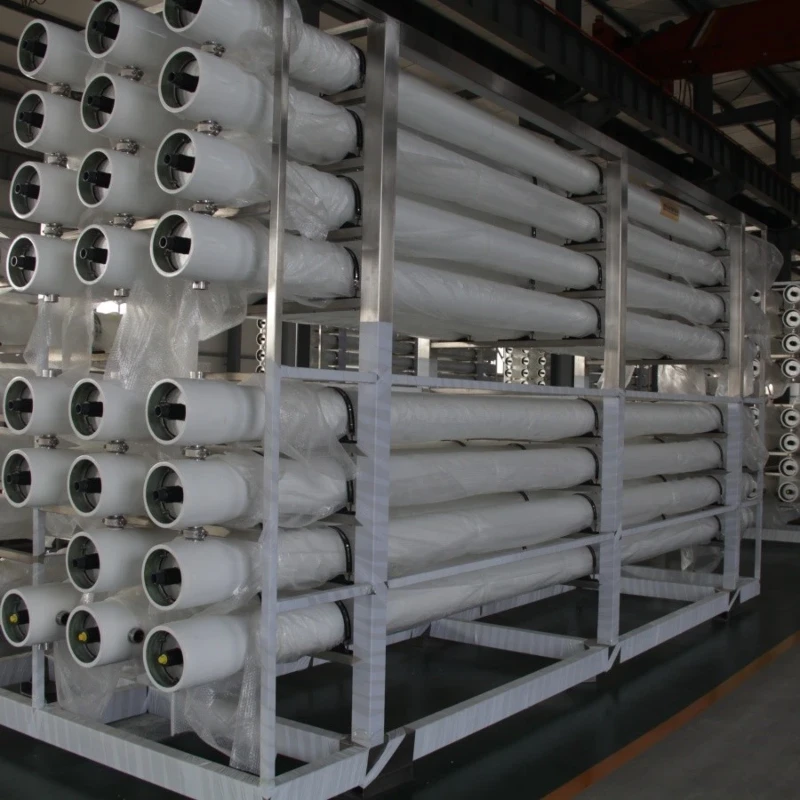

Technical Advantages and Economic Value of Ceramic Ultrafiltration Membranes
I. Weather-Resistant Materials: Cornerstone for Harsh Environments
CERAMEMBR® Ceramic Membrane, sintered from alumina (Al₂O₃) and zirconia (ZrO₂), leverages crystalline structures to deliver three core advantages:
- High-Temperature Tolerance: Withstands >80°C, adapting to Middle Eastern summer surface water temperatures of 50°C.
- Chemical Corrosion Resistance: Endures high-chloride seawater and aggressive cleaning agents (acids/alkalis), boasting a 15–20 year lifespan-3× longer than polymer membranes.
- Zero Secondary Pollution: Inorganic composition eliminates plasticizer leaching, ensuring drinking water safety.
II. High-Efficiency Pretreatment: Reducing Overall Operational Costs
As a pretreatment barrier for Reverse Osmosis (RO), Ceramic Ultrafiltration for Seawater Desalination critically determines system economics:
- Enhanced Contaminant Rejection: Tubular ceramic membrane's cross-flow design intercepts 99.8% of suspended solids and pathogens, reducing RO membrane fouling frequency and extending cleaning cycles by 4×.
- Energy Optimization: Compact design saves 30% space; high recovery rates indirectly lower system energy consumption by minimizing RO fouling.
- Maintenance Cost Reduction: Anti-algal bloom properties prevent shutdowns during red tides, cutting chemical usage by 60%.
> Comparative Data: Although ceramic membranes require higher initial investment than polymer membranes, their 20-year lifecycle cost (including replacements, energy, and maintenance) is lower.
III. Scenario Adaptability: Flexible Response to Diverse Needs
Porous ceramic membranes, via modular designs, serve key Middle Eastern applications:
- Municipal Water Supply: Processes high-turbidity seawater in UAE coastal areas, achieving product water turbidity <0.1 NTU-meeting WHO direct-drinking standards.
- Industrial Recycled Water: Reuses cooling wastewater in Saudi petrochemical plants; oil-resistant properties ensure stable flux.
- Emergency Water Supply: Containerized ceramic membrane units in Dubai tourist zones respond to water quality fluctuations within 72 hours.
Conclusion: Technology-Enabled Sustainable Water Strategies
Ceramic membranes, through breakthroughs in materials science and engineering design, are reshaping desalination economics: their longevity and low operational costs align with the Middle East's "Vision 2030" goal to reduce freshwater production costs. For projects like Saudi NEOM City and Indonesia's Nusantara capital, selecting reliable pretreatment technology is pivotal.
Call to Action
Taihe Environmental will showcase the full CERAMEMBR® ceramic desalination membrane series at:
- Dubai WETEX 2025 (Booth 3H18)
- Jakarta Water Forum 2025 (Booth NO.BH07)
Live demonstrations of high-salinity adaptation solutions will be featured. Visit the "Ceramic Membrane Solutions" section on our official website to access technical white papers and schedule engineer consultations-reducing your project's lifecycle costs by 20%.