

Hey there! I'm from a supplier of Industrial Reverse Osmosis (RO) Systems. Today, I wanna chat about when you might actually need a degasser in an Industrial RO System.
First off, let's understand what an Industrial RO System is all about. We offer different types of these systems, like the Seawater Reverse Osmosis Desalination System which is super useful for turning seawater into fresh, usable water, and the Semiconductor Reverse Osmosis System that's tailored for the high - tech semiconductor industry. There's also the Reverse Osmosis Seawater Desalination Plant which is a large - scale solution for desalination.
What is a Degasser and How Does it Work?
A degasser is a piece of equipment that helps remove dissolved gases from water. In an RO system, common gases we're concerned with are oxygen, carbon dioxide, and sometimes nitrogen. When water has these dissolved gases, it can cause a bunch of problems down the line.
The basic principle behind a degasser is pretty straightforward. It uses a combination of physical and chemical processes to strip the gases out of the water. For example, in a vacuum degasser, the pressure inside the chamber is reduced. As the pressure drops, the solubility of the gases in water decreases, and they start to come out of the solution in the form of bubbles. Then these bubbles are removed from the water, leaving you with gas - free or at least gas - reduced water.
When Do You Really Need a Degasser?
High Carbon Dioxide (CO₂) Levels
One of the most common scenarios where a degasser is needed is when the feed water has high levels of carbon dioxide. Carbon dioxide dissolves in water to form carbonic acid. This can lower the pH of the water, which is a big deal in an RO system.
The membranes in an RO system are sensitive to pH. If the pH is too low, it can damage the membranes over time. Also, the presence of carbonic acid can lead to scaling on the membranes. Scaling is when minerals in the water precipitate out and form a hard layer on the membrane surface. This reduces the membrane's efficiency and can even clog it completely if left untreated.
For instance, if you're using surface water sources like rivers or lakes, they often absorb carbon dioxide from the atmosphere. In some industrial areas where there's a lot of pollution, the carbon dioxide levels in the water can be even higher. So, in these cases, a degasser can be a real lifesaver for your RO system. It'll remove the carbon dioxide, keep the pH in check, and prevent scaling and membrane damage.
Oxygen - Related Issues
Oxygen is another gas that can cause problems. Dissolved oxygen in water can lead to corrosion of the metal components in the RO system. Pipes, valves, and pumps made of metal are at risk. Corrosion can weaken these components, leading to leaks and system failures.
In addition, oxygen can also support the growth of aerobic bacteria in the water. These bacteria can form biofilms on the RO membranes. Biofilms are like a slimy layer of bacteria and their by - products. They can block the pores of the membrane, reducing the water flow and the overall efficiency of the RO system.
If your feed water comes from a well or an open reservoir, it might have a relatively high oxygen content. That's when a degasser can step in and remove the oxygen, protecting your system from corrosion and biofilm formation.
Nitrogen in Special Applications
In some specialized industries, like the semiconductor industry, nitrogen can be a concern. Nitrogen can cause issues in processes that require extremely pure water. Even a small amount of dissolved nitrogen can lead to problems like bubble formation in the final product.
In the Semiconductor Reverse Osmosis System, the water needs to be of the highest purity. A degasser can remove the dissolved nitrogen to ensure the water meets the strict quality requirements for semiconductor manufacturing.
Signs That You Might Need a Degasser
If you're not sure whether your RO system needs a degasser, there are a few signs you can look out for.
Firstly, if you notice a drop in the water production rate of your RO system, it could be due to scaling or biofilm formation caused by dissolved gases. The membranes are getting clogged, and the water can't pass through as easily.
Secondly, if you see signs of corrosion on the metal parts of your system, like rust on pipes or valves, it's a good indication that there might be too much oxygen in the water.
Another sign is an increase in the pressure differential across the RO membranes. If the pressure on the inlet side is much higher than the outlet side, it means there's resistance, and that resistance could be caused by scaling or biofilm, both of which can be related to dissolved gases.
Types of Degassers for Industrial RO Systems
There are different types of degassers available, and the choice depends on various factors like the type and concentration of gases in the feed water, the flow rate of the RO system, and the budget.
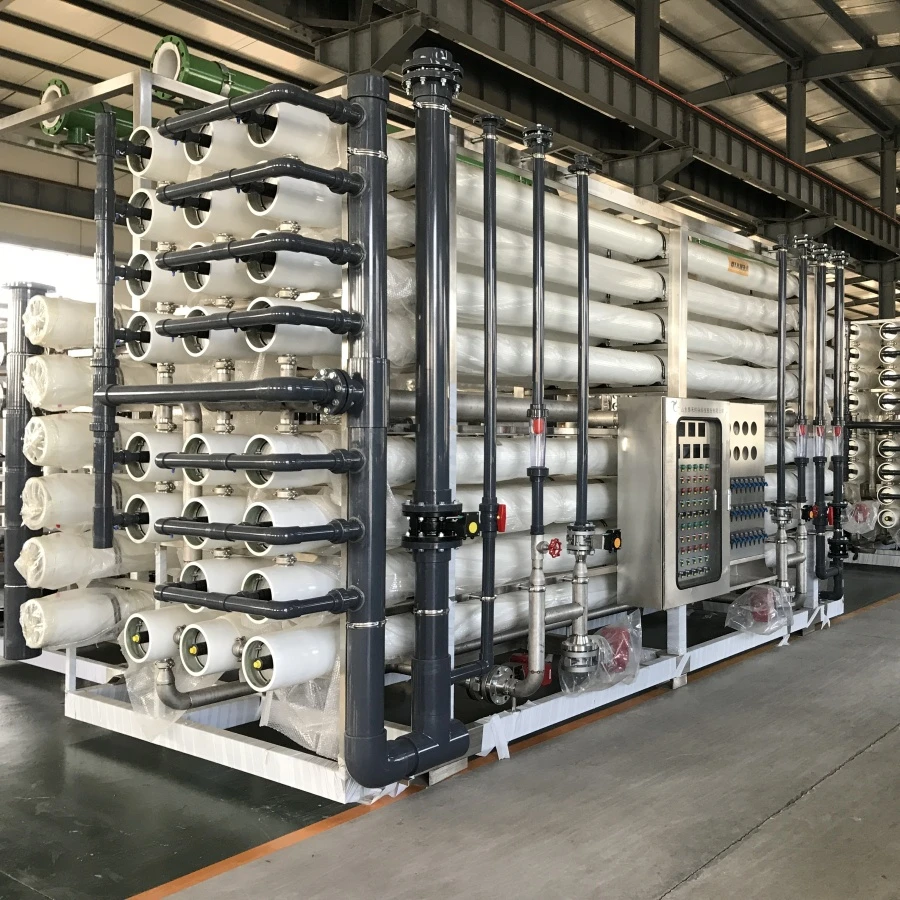

Vacuum Degassers
Vacuum degassers are popular because they're relatively efficient at removing a wide range of gases. As I mentioned earlier, they work by reducing the pressure inside a chamber. They're good for removing both carbon dioxide and oxygen. However, they can be a bit expensive to install and operate, especially for large - scale systems, because they require a vacuum pump to maintain the low pressure.
Air Stripping Degassers
Air stripping degassers use air to remove the dissolved gases. They work by passing air through the water in a counter - current flow. The gases in the water transfer to the air and are then removed. These degassers are more affordable and easier to maintain compared to vacuum degassers. But they might not be as effective in removing certain gases, especially if the gas concentration is very high.
Conclusion and Call to Action
In conclusion, a degasser is an important component in an Industrial RO System when you're dealing with high levels of dissolved gases like carbon dioxide, oxygen, or nitrogen. It can protect your system from membrane damage, corrosion, and biofilm formation, ensuring the long - term efficiency and reliability of your RO system.
If you're facing any of the issues I've talked about or if you're planning a new Industrial RO System installation and think you might need a degasser, don't hesitate to reach out. We're here to help you find the best solution for your specific needs. Whether it's choosing the right type of degasser or integrating it into your existing system, we've got the expertise.
Let's start a conversation and see how we can make your Industrial RO System work at its best.
References
- Cheryan, M. (1986). Ultrafiltration Handbook. Technomic Publishing Co., Inc.
- Snyder, S. A., & Amy, G. L. (1996). Reverse Osmosis and Nanofiltration Membranes: Principles, Applications, and Case Studies. American Water Works Association Research Foundation.