

Hey there! As a supplier of RO desalination units, I often get asked about the difference between RO desalination units for seawater and brackish water. It's a great question, and in this blog post, I'm gonna break it down for you.
First off, let's talk about what RO desalination is. RO stands for reverse osmosis, which is a process that uses a semi - permeable membrane to remove salts and other impurities from water. The basic principle is the same for both seawater and brackish water desalination, but there are some key differences.
Water Composition
Seawater is way saltier than brackish water. On average, seawater has a salt concentration of about 35,000 parts per million (ppm). That's a whole lot of salt! Brackish water, on the other hand, has a salt concentration that ranges from 1,000 to 10,000 ppm. This difference in salt content has a big impact on how the RO desalination unit works.
Because seawater has such a high salt concentration, the RO membranes in a seawater desalination unit have to be more robust. They need to withstand higher pressures to force the water through the membrane and leave the salt behind. In contrast, the membranes in a brackish water desalination unit don't need to be as tough since the salt concentration is lower.
Pressure Requirements
The pressure required for reverse osmosis is directly related to the salt concentration of the water. For seawater desalination, you typically need a pressure of around 800 to 1,200 pounds per square inch (psi). That's a huge amount of pressure! To put it in perspective, the pressure in a car tire is usually around 30 - 35 psi.
For brackish water desalination, the pressure requirement is much lower, usually in the range of 200 to 400 psi. This means that the pumps and other equipment in a brackish water desalination unit can be less powerful and less expensive than those in a seawater desalination unit.
Membrane Selection
As I mentioned earlier, the membranes used in seawater and brackish water desalination units are different. Seawater membranes are designed to have a high rejection rate for salts and other impurities. They are made from materials that can handle the high pressures and the harsh chemical environment of seawater.
Brackish water membranes, on the other hand, are more focused on efficiency. Since the salt concentration is lower, these membranes can be designed to allow more water to pass through while still maintaining a good rejection rate. This means that brackish water desalination units can often produce more water per unit of membrane area than seawater desalination units.
Pre - treatment
Pre - treatment is an important step in any RO desalination process. It helps to remove larger particles, organic matter, and other contaminants that could damage the RO membranes. However, the pre - treatment requirements for seawater and brackish water are different.

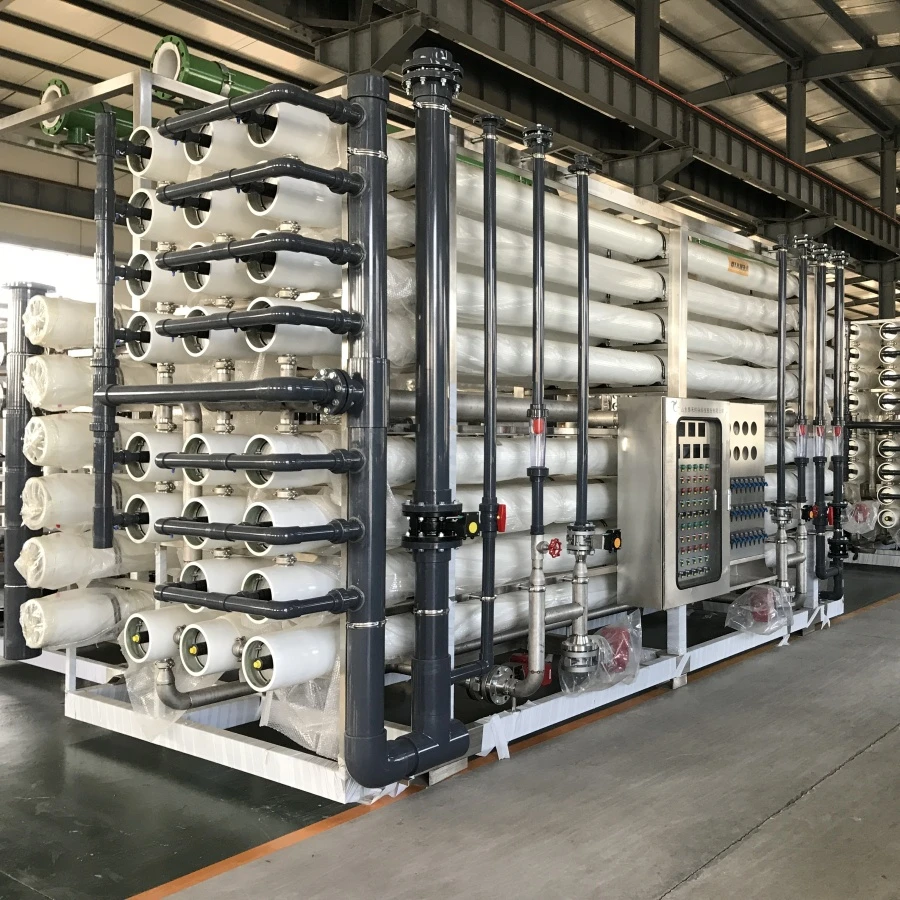
Seawater contains a lot of suspended solids, such as sand, silt, and plankton. It also has a high concentration of dissolved organic matter. To protect the RO membranes, seawater desalination units usually require a more extensive pre - treatment system. This might include processes like filtration, sedimentation, and chemical treatment to remove these contaminants.
Brackish water typically has fewer suspended solids and less dissolved organic matter than seawater. So, the pre - treatment system for a brackish water desalination unit can be simpler and less expensive.
Energy Consumption
Energy consumption is a major factor in the operation of RO desalination units. Seawater desalination units use a lot more energy than brackish water desalination units. This is mainly because of the high pressure requirements for seawater desalination. The pumps need to work much harder to push the water through the membrane at such high pressures.
Brackish water desalination units, with their lower pressure requirements, consume less energy. This not only reduces the operating costs but also makes brackish water desalination a more environmentally friendly option in terms of energy use.
Cost
The cost of an RO desalination unit is influenced by several factors, including the type of water it's designed for. Seawater desalination units are generally more expensive than brackish water desalination units. The cost of the membranes, pumps, and pre - treatment equipment is higher due to the more demanding operating conditions.
The operating costs of seawater desalination units are also higher because of the higher energy consumption. In contrast, brackish water desalination units are more cost - effective both in terms of initial investment and ongoing operation.
Applications
Seawater desalination is often used in coastal areas where freshwater is scarce. It provides a reliable source of drinking water for large populations. Many countries in the Middle East, for example, rely heavily on seawater desalination to meet their water needs.
Brackish water desalination is commonly used in areas where there is brackish groundwater or surface water. It can be used for agricultural irrigation, industrial processes, and even for small - scale drinking water supply in rural areas.
If you're interested in learning more about RO desalination systems, you can check out our Desalination RO System. We also have a great selection of Reverse Osmosis Systems Seawater and Semiconductor Reverse Osmosis System.
So, if you're in the market for an RO desalination unit, it's important to understand the differences between seawater and brackish water units. Whether you need a system for a large - scale coastal city or a small - scale rural project, we can help you find the right solution. Don't hesitate to reach out if you have any questions or want to start a procurement discussion. We're here to make sure you get the best RO desalination unit for your needs.
References
- "Desalination: Principles and Applications" by A. E. Greenlee, L. F. Lawler, D. F. Freeman, B. D. Marinas, and B. J. Childress.
- "Reverse Osmosis Technology" by M. Cheryan.