

How Membrane Technology Improves Reclaimed Water Treatment Efficiency: From Industrial Wastewater Treatment to Advanced Water Resource Recovery

Many industrial companies encounter a similar challenge when developing water treatment systems: after investing in wastewater treatment facilities, why is the treated water still unable to be directly reused in production?In reality, this does not mean that the wastewater treatment system is ineffective. The reason is that discharge compliance and industrial water reuse represent two different treatment objectives.
Traditional industrial wastewater treatment mainly focuses on pollution control. Through physical, chemical, and biological treatment processes, reduce key water quality parameters such as COD, BOD, and suspended solids to ensure that wastewater meets discharge requirements.However, for companies aiming to reduce freshwater consumption and improve water resource efficiency, meeting discharge standards alone is not enough. Industrial reuse usually requires a more stable and higher-quality water source, which means further water quality improvement based on conventional wastewater treatment processes.This is why more and more industrial projects are adopting reclaimed water treatment solutions.
During this process, membrane technology becomes the key link between "wastewater treatment" and "water resource recovery". Through membrane separation technologies such as ceramic membranes, ultrafiltration, and reverse osmosis, contaminants that are difficult to control through conventional treatment methods can be further removed, allowing treated water to become suitable for industrial reuse applications.
So, how membrane technology improves reclaimed water treatment efficiency? What roles do different membrane technologies play in practical engineering projects? And how should companies select the right membrane combination?
Why Does Industrial Water Reuse Require Advanced Membrane Treatment?
In many industrial projects, wastewater treatment processes already include pretreatment, biological treatment, sedimentation, and filtration stages.
These processes can effectively reduce pollutant concentrations, but they mainly focus on "pollutant removal" and may not always meet the requirements of different industrial water reuse applications.
For example, wastewater from a manufacturing company after biological treatment may already meet discharge standards. However, it may still contain fine suspended solids, colloidal substances, organic residues, and dissolved salts.If such water enters the production system directly, it may cause problems such as equipment scaling, pipeline blockage, production process fluctuations, and reduced operating efficiency of circulating water systems.
Therefore, industrial water reuse is not simply about returning treated wastewater back into use. Instead, it requires advanced treatment based on the final application requirements.This is also the biggest difference between reclaimed water treatment and conventional wastewater treatment.
Reclaimed water treatment focuses not only on whether pollutants have been reduced, but also on:
Whether the treated water quality remains stable?
Whether it meets production requirements?
Whether it can continuously replace part of the freshwater supply?
Membrane technology plays a critical role in achieving these goals.
Ceramic Membrane: Solving Stability Challenges in High-Pollution Industrial Wastewater Reuse
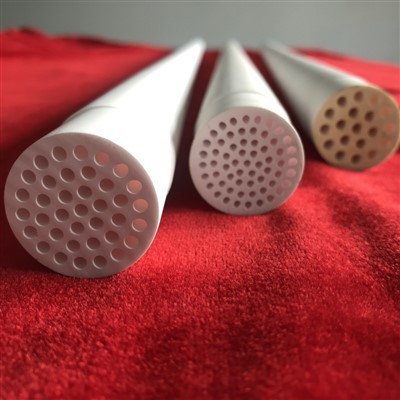

In industrial water reuse projects, one of the biggest challenges is not only membrane filtration performance, but also long-term operational stability.
Many industrial wastewater streams have characteristics such as high oil content, high suspended solids concentration, significant water quality fluctuations, and complex pollutant compositions.If this type of wastewater enters downstream membrane systems without effective pretreatment, membrane fouling may occur easily, reducing overall treatment efficiency.This is why the ceramic membrane filtration system has significant advantages in industrial applications.
Compared with conventional polymeric membrane materials, ceramic membranes offer better chemical resistance and mechanical stability, allowing them to operate under more challenging industrial conditions.In high-strength wastewater treatment applications, ceramic membranes do not simply perform filtration. More importantly, they improve the reliability of the entire treatment system.
For example, in applications involving ceramic membranes for wastewater reuse, ceramic membranes are usually used as an advanced pretreatment unit.They can effectively reduce suspended solids, oils, and colloidal pollutants in wastewater, providing more stable feed conditions for subsequent UF or RO treatment processes.
For industries such as chemical manufacturing, mining, and general manufacturing, this design approach is particularly important.Although downstream RO systems can achieve deep purification, they have relatively strict requirements for feed water stability. If upstream treatment is insufficient, frequent RO membrane fouling may occur, significantly increasing the overall operating cost of the system.Therefore, the value of ceramic membranes is not only reflected in filtration performance but also in helping the entire water reuse system achieve stable long-term operation.
UF and RO: An Important Combination for Building Efficient Industrial Water Reuse Systems
In practical industrial projects, UF and RO are not competing technologies but complementary solutions. UF mainly serves to improve feed water stability, while RO is used to achieve advanced desalination.
When designing an UF and RO system for water reuse, many companies use UF as an important protective pretreatment step before RO.Even after upstream treatment, wastewater may still contain fine particles and colloidal substances. If these contaminants enter the RO system directly, they can easily accumulate on the membrane surface, resulting in reduced flux and decreased system performance.
UF can further remove suspended particles, colloidal substances, and some microorganisms. This helps improve RO feed water conditions and extend RO operating cycles and reduce maintenance frequency.
RO, on the other hand, performs deeper purification.When companies need to reuse treated water for production processes, boiler feed water, or high-quality manufacturing applications, filtration technologies alone are usually insufficient. This is because these applications have stricter requirements for parameters such as dissolved salts and conductivity.Through membrane separation, RO reduces dissolved substances in water, allowing reclaimed water to achieve higher quality standards.
Therefore, an efficient industrial water reuse system is usually not achieved through a single membrane unit. Instead, different membrane technologies are combined according to raw water characteristics, pollutant types, and final reuse requirements.
This water-quality-oriented technology combination allows different membrane processes to maximize their individual advantages, improving the operational stability and water recovery efficiency of the reclaimed water treatment system.Compared with a single treatment method, the integrated application of multiple membrane technologies can better adapt to complex industrial wastewater conditions and reduce maintenance pressure during long-term operation.
How to Select the Right Membrane Technology? The Key Depends on Industrial Application Requirements
When selecting membrane technologies, many companies tend to focus mainly on the equipment itself while overlooking water quality characteristics and reuse objectives.In reality, there is no single "best membrane technology" suitable for every project.The so-called best membrane technology for wastewater recycling should be selected based on specific application conditions.
For industrial wastewater with high suspended solids, high oil content, and high pollutant loads, improving pretreatment performance is usually the primary consideration. In such cases, ceramic membranes often provide better adaptability due to their strong fouling resistance and operational stability.
For projects that have already completed pretreatment and aim to improve RO system stability, UF is usually a more suitable choice.
For production processes requiring high-quality reclaimed water, further advanced treatment combined with RO is often necessary.For example:
Mining wastewater reuse projects usually focus more on controlling suspended solids and inorganic particles.
Chemical wastewater reuse projects pay greater attention to complex pollutants and membrane fouling issues.
Industrial circulating water reuse projects in manufacturing industries place more emphasis on long-term operational stability and consistent water quality.
Therefore, excellent membrane system design is not simply about adding more equipment. Instead, it is about developing a reasonable treatment strategy based on the actual requirements of each industrial application.
Membrane Technology Drives the Development of Industrial Water Resource Recycling
As industrial water conservation requirements continue to increase, more and more companies are adopting wastewater recycling systems to reduce dependence on external water resources.
From the perspective of industry development, industrial water treatment is gradually shifting from the traditional approach of "treating wastewater and discharging it" toward "treating wastewater and recovering it for reuse".Among these developments, water reclamation technology provides more possibilities for industrial water recycling.
Ceramic membranes improve the stability of complex wastewater treatment, UF enhances downstream system operating conditions, and RO meets high-quality water requirements.Different membrane technologies complement each other, jointly improving the efficiency and reliability of reclaimed water treatment.
For industrial companies, the future value of water treatment systems will not only be reflected in meeting environmental regulations, but also in reducing production water costs, improving resource utilization efficiency, and enhancing sustainable development capabilities.A truly efficient industrial water reuse solution is not simply about treating more wastewater. Instead, it is about using advanced technologies to enable every part of the water resource to create greater value again.
Conclusion: Membrane Technology Creates Greater Value for Industrial Water Recycling
With increasingly strict industrial water conservation requirements and growing demand for sustainable production, water reuse has become an important direction for modern industrial water management.Traditional wastewater treatment mainly focuses on reducing pollution and ensuring compliance with discharge regulations. However, the future of industrial water treatment is moving toward resource recovery and efficient water recycling.
Through advanced water reclamation technology, treated wastewater can be transformed from a discharged waste stream into a valuable water resource for industrial applications.In this transformation process, membrane technologies play different but complementary roles.
Ceramic membranes improve treatment stability for complex industrial wastewater with high pollution loads. UF helps create more stable operating conditions for downstream treatment units. RO enables high-quality water purification for applications with strict water quality requirements.
Together, these membrane technologies enhance the efficiency and reliability of reclaimed water treatment systems.
For industrial companies, the value of a modern water treatment system is no longer limited to meeting environmental compliance requirements. More importantly, it lies in reducing freshwater consumption, lowering production water costs, improving resource utilization efficiency, and supporting long-term sustainable development.
A truly efficient industrial water reuse solution is not simply about treating more wastewater. It is about using advanced technologies to maximize the value of every drop of water and enable continuous water recycling and resource recovery.