


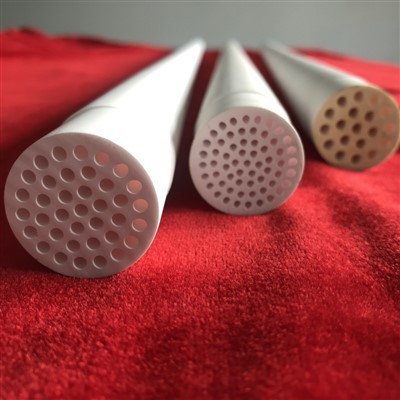

With the growing global emphasis on the sustainable use of water resources and environmental protection, advanced water treatment technologies have become a focal point. Among them, ceramic membrane technology, with its outstanding performance, is playing an increasingly important role in the field of industrial wastewater treatment and resource recovery. However, many users still have numerous questions when first encountering or selecting this technology. To help users better understand and apply this technology, we have compiled the most common questions about ceramic membranes and provide a detailed set of answers here.
► Q1: What exactly is a ceramic membrane?
Fundamentally, a ceramic membrane is a precision filtration material used for substance separation. It is made from inorganic materials such as alumina and zirconia, sintered at high temperatures through a special process. Its unique structure is an asymmetric porous ceramic membrane, typically composed of a porous support layer and a finer, active separation layer. This structure not only ensures the overall mechanical strength of the membrane but also enables high-efficiency substance separation.
► Q2: Compared to traditional organic membranes, what are the core advantages of ceramic membranes?
The greatest advantage of ceramic membranes lies in their unparalleled stability. This is specifically demonstrated in:
Chemical Stability: They can resist corrosion from strong acids, strong alkalis, oxidizing agents, and various organic solvents, making their application range far broader than that of traditional organic membranes.
Thermal Stability: They can operate stably for long periods in high-temperature environments, whereas organic membranes tend to deform or degrade at high temperatures.
Mechanical Strength: They possess high strength and wear resistance, are not prone to fiber breakage or damage, ensuring the long-term stability of the filtration system.
Fouling Resistance: Their surface properties and rigid structure make them less susceptible to compaction by pollutants, and they have good flux recovery.
Small Footprint: The system design is compact, significantly saving factory floor space, which is particularly suitable for upgrading or new projects in space-constrained sites.
► Q3: Is the price of ceramic membranes much higher than that of polymeric membranes?
In terms of initial procurement costs, the investment for ceramic membranes is indeed higher than for organic membranes made from polymeric materials. However, evaluating a technology should focus on its total life-cycle cost. Due to their extremely long service life, low maintenance costs, strong durability, and excellent operational efficiency, ceramic membranes significantly reduce replacement frequency and maintenance downtime. In the long run, the comprehensive economic benefits brought by their superior reliability often prove to be more advantageous.
► Q4: How long is the service life of a ceramic membrane?
The service life of a ceramic membrane is one of its most prominent advantages. Due to its robust inorganic material properties, it can withstand harsh physical and chemical cleaning conditions. Under standardized operation and reasonable maintenance, its service life is approximately twenty years, which is several times that of traditional organic membranes. This greatly reduces the replacement costs and operational burden for owners.
► Q5: What can ceramic membranes filter out? What is their filtration precision?
The filtration precision of ceramic membranes covers a wide range, primarily including microfiltration and ultrafiltration levels. They can effectively retain suspended solids, colloids, bacteria, viruses, and large-molecule organic matter in water. The core of ceramic membrane water filtration technology lies in its uniform and stable pore size distribution, which enables precise sieving separation, ensuring the stability and reliability of the permeate quality.
► Q6: What types of wastewater are ceramic membranes particularly suited for treating?
Leveraging their high-temperature and corrosion resistance, ceramic membranes are especially adept at handling "tough nuts to crack" that are difficult for traditional technologies-harsh and complex industrial wastewater. Examples include high-temperature wastewater, oily wastewater, high-concentration acid/alkali wastewater, and chemical wastewater containing organic solvents. In these areas, the application of ceramic membranes is a key step in achieving ceramic membranes for wastewater reuse, effectively recovering valuable water resources.
► Q7: Are the cleaning and maintenance of ceramic membranes complicated?
This is precisely one of the major advantages of ceramic membranes. Unlike delicate organic membranes, the cleaning and maintenance of ceramic membranes are quite "hardcore" and convenient. They can withstand high-intensity backwashing, chemical cleaning with strong acids and alkalis, and even high-temperature steam sterilization. This simple user guide for ceramic membranes indicates that proper cleaning can almost completely restore the membrane's flux, with simple operations and a small maintenance workload.
► Q8: In water treatment, how do they differ from traditional filtration methods?
Compared to traditional pretreatment methods like sand and carbon filtration, ceramic membranes offer higher filtration precision and produce better, more stable effluent quality. When compared to organic membranes, ceramic membranes used for water treatment exhibit greater environmental adaptability and a longer service life. This advantage is particularly pronounced when treating complex industrial wastewater, making them a reliable guarantee for achieving high standards of ceramic membranes for wastewater reuse.
► Q9: Which industries can benefit from ceramic membrane technology?
The application fields for ceramic membranes are extensive. In addition to their use in upgrading municipal sewage treatment and reclaimed water reuse, they play a crucial role in material separation, product purification, and ceramic membranes for wastewater treatment in industries such as petrochemical, coal chemical, pharmaceutical, food and beverage, and bio-fermentation, helping enterprises achieve energy conservation, emission reduction, and a circular economy.
► Q10: What is unique about the ceramic membranes from Taihe Environmental Protection?
As a professional enterprise deeply rooted in the field of ceramic membranes, we, Shandong Taihe Environmental Protection Technology Co., Ltd. have always been committed to technological innovation and application expansion.
Core Technology: Our core product, the tubular ceramic membrane, has achieved key breakthroughs in material formulation and sintering processes. The product features higher mechanical strength and excellent alkali resistance, with its overall performance reaching an internationally advanced level.
Strategic Layout: We recognize that our technological advantages are highly compatible with the complex water treatment challenges faced during the rapid industrialization of the Southeast Asian region. Therefore, we are actively expanding into Southeast Asian markets, represented by Indonesia and Malaysia, aiming to provide efficient and reliable wastewater treatment and reuse solutions for local pillar industries such as petrochemicals and palm oil, and to promote the technological upgrading of local ceramic membranes for wastewater reuse. Our goal is to contribute to the water environment security and sustainable development of more regions around the world with advanced and reliable membrane technology.