

► Comparison Between Traditional Construction Models and Modular Delivery
In 2026, as water scarcity becomes increasingly severe, the demand for industrial and emergency water supply is characterized by both urgency and uncertainty. Traditional land-based seawater desalination plants often involve construction cycles lasting several years, spanning from site selection and civil engineering approvals to equipment installation and on-site commissioning. This lengthy delivery process often fails to meet the immediate water needs during sudden droughts or short-term industrial projects.
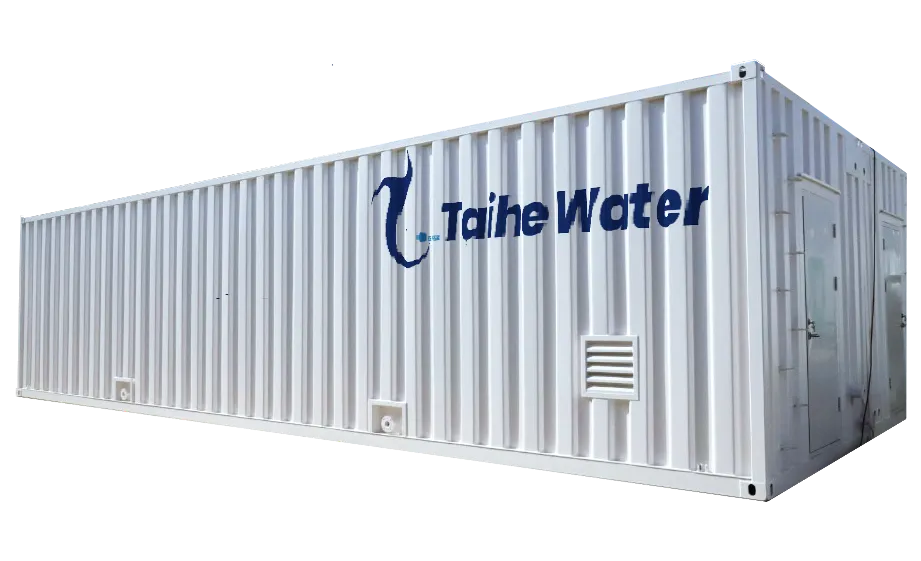
In contrast, the emergence of containerized desalination plants has completely transformed this situation. By integrating complex treatment units into standard containers, water treatment engineering has transitioned from "on-site construction" to "factory manufacturing."
► The Core Logic of Shortening Delivery Cycles
The primary advantage of containerized solutions lies in their high degree of pre-integration. All process piping, electronic control systems, membrane modules, and chemical dosing systems are installed within a controlled factory environment. This production method eliminates the impact of external unstable factors, such as weather and on-site construction conditions, on the project timeline. Following pre-commissioning at the factory, the equipment is delivered to the site as a complete unit for "plug-and-play" implementation. This model significantly shortens the entire process from order confirmation to system water production, securing valuable time for clients in urgent need of water sources.
► Performance Under Extreme Operating Conditions
In emergency rescue operations and the construction of remote mining areas, equipment often faces harsh natural environments. In such settings, the durability and shock resistance of the system are key indicators of its value.
► Critical Support from Ceramic Membrane Technology
In the pretreatment stage, the ceramic membranes for seawater filtration developed by Taihe Environmental Protection have demonstrated significant technical advantages. Compared to traditional organic filtration membranes, these ceramic membranes possess superior chemical stability and mechanical strength.
When dealing with seawater that has high turbidity or contains large amounts of suspended particles, ceramic membranes maintain a stable flux and can withstand frequent physical backwashing and high-concentration chemical cleaning. This high-performance pretreatment solution not only effectively protects the downstream reverse osmosis systems seawater but also reduces the system's reliance on the technical skill level of operators, ensuring the long-term stable operation of the equipment under harsh conditions such as deserts or islands.
► Application Scenarios in Industrial and Emergency Sectors
► Temporary Mining Areas and Engineering Construction
In the resource extraction sector, many mining areas are located in desert regions with severe water shortages, and projects are often phased in nature. Constructing permanent water supply facilities is not only costly but also difficult to recover or reuse once the project concludes.
The flexibility of the mobile ro plant is fully realized in these scenarios. Due to the standard container design, the equipment can be relocated as a whole as the mining area moves. This asset mobility provides industrial users with extremely high investment flexibility while reducing permanent interference with the local ecological environment.
► Drought Response and Emergency Water Supply
When a region suffers from a sudden drought or the original water supply system is damaged, restoring clean drinking water quickly is the top priority. containerized ro purification systems possess high mobility and can be rapidly deployed to affected areas via trucks or cargo ships. The system's built-in intelligent control logic allows non-professional personnel to perform basic operations after simple training, thereby establishing a reliable and safe water supply guarantee line in a short time.
► Advantages of Professional Manufacturing and System Integration
The internal integration of modern containerized desalination plants is not a simple stacking of components; rather, it involves sophisticated hydraulic balance and spatial layout optimization.
► Compact Layout and Process Integration
Within the limited space of a container, engineers must rationally configure high-pressure pumps, membrane housings, energy recovery devices, and various monitoring sensors. Professional piping integration must account for fluid dynamics to reduce energy consumption while reserving sufficient maintenance access. During the system integration process, Taihe Environmental Protection focuses on the craftsmanship of every detail, ensuring that every unit produced meets rigorous industrial standards.
► Asset Value Retention and Reuse
For investors, modular water treatment assets like containerized desalination plants offer exceptional value retention. Once a project's water supply mission is completed, the equipment can be put into use for the next project after simple cleaning and maintenance, or enter the secondary market directly. This characteristic is incomparable to traditional fixed assets and greatly optimizes the capital utilization rate of enterprises.
► Summary and Action Guide
In an industrial era pursuing efficiency and response speed, modular water treatment facilities are no longer an alternative but the preferred choice for off-grid water supply and emergency assurance. With their excellent delivery speed, stable process performance, and high mobility, containerized desalination stations are providing a practical technical path for the global water resource crisis.
If you are currently facing a project water shortage or an urgent water supply crisis, finding a supplier with ready-stock capabilities and professional technical support is vital.
Get Support: You can click "Online Consultation" to obtain the latest stock configuration list. Our technical experts will provide customized cost calculation suggestions based on your specific raw water characteristics and water quality standards.