

Ultrafiltration (UF) is a crucial separation process in the food industry, enabling the purification, concentration, and fractionation of various food products. However, membrane fouling remains a significant challenge, leading to reduced flux, increased energy consumption, and shorter membrane lifespan. Effective membrane regeneration methods are essential to maintain the performance and efficiency of ultrafiltration systems. As a leading supplier of Ultrafiltration in Food Industry, we understand the importance of membrane regeneration and offer comprehensive solutions to our customers.
Understanding Membrane Fouling in Ultrafiltration
Membrane fouling is the accumulation of particles, macromolecules, and microorganisms on the membrane surface or within its pores, which can significantly impact the filtration performance. In the food industry, fouling agents can include proteins, fats, carbohydrates, and suspended solids from various food sources. There are two main types of fouling: reversible and irreversible. Reversible fouling can be removed by physical cleaning methods, while irreversible fouling requires more aggressive chemical cleaning.
Physical Regeneration Methods
Backwashing
Backwashing is one of the most common physical regeneration methods in ultrafiltration. It involves reversing the flow of the permeate through the membrane to dislodge and remove the fouling layer. Backwashing is typically performed at regular intervals during the filtration process to prevent the buildup of fouling. The frequency and duration of backwashing depend on the feed characteristics, membrane type, and operating conditions.
Air Scouring
Air scouring is another effective physical method for membrane regeneration. It involves introducing air bubbles into the feed solution or directly into the membrane module. The rising air bubbles create turbulence and shear forces that help to remove the fouling layer from the membrane surface. Air scouring can be used in combination with backwashing to enhance the cleaning efficiency.
Mechanical Cleaning
Mechanical cleaning methods, such as sponge ball cleaning or membrane vibration, can also be used to remove fouling from ultrafiltration membranes. Sponge ball cleaning involves passing sponge balls through the membrane module to scrub the membrane surface. Membrane vibration can be achieved by using mechanical or ultrasonic devices to create vibrations that dislodge the fouling layer.
Chemical Regeneration Methods
Acid Cleaning
Acid cleaning is commonly used to remove inorganic fouling, such as metal oxides and scale, from ultrafiltration membranes. Common acids used in membrane cleaning include hydrochloric acid, sulfuric acid, and citric acid. The choice of acid depends on the type of fouling and the membrane material. Acid cleaning should be performed carefully to avoid damage to the membrane.
Alkali Cleaning
Alkali cleaning is effective for removing organic fouling, such as proteins and fats, from ultrafiltration membranes. Sodium hydroxide is the most commonly used alkali for membrane cleaning. Alkali cleaning can also help to remove biofilms from the membrane surface. However, like acid cleaning, alkali cleaning should be performed with caution to prevent membrane damage.
Oxidative Cleaning
Oxidative cleaning agents, such as hydrogen peroxide and sodium hypochlorite, can be used to remove organic fouling and disinfect the membrane. Oxidative cleaning is particularly effective for removing biofilms and reducing microbial contamination. However, oxidative cleaning agents can also cause membrane degradation if used at high concentrations or for extended periods.
Enzymatic Cleaning
Enzymatic cleaning is a relatively new approach for membrane regeneration in the food industry. Enzymes can specifically target and break down organic fouling agents, such as proteins and carbohydrates, without causing damage to the membrane. Enzymatic cleaning is environmentally friendly and can be used in combination with other cleaning methods to enhance the cleaning efficiency.
Combined Regeneration Methods
In many cases, a combination of physical and chemical regeneration methods is required to achieve effective membrane cleaning. For example, backwashing can be followed by chemical cleaning to remove both reversible and irreversible fouling. The choice of combined regeneration methods depends on the type and severity of fouling, the membrane material, and the operating conditions.
Factors Affecting Membrane Regeneration
Several factors can affect the effectiveness of membrane regeneration, including:
- Feed Characteristics: The composition, concentration, and particle size distribution of the feed solution can significantly impact the fouling rate and the choice of regeneration methods.
- Membrane Material: Different membrane materials have different chemical and physical properties, which can affect their resistance to fouling and their compatibility with cleaning agents.
- Operating Conditions: The operating pressure, temperature, and flow rate can influence the fouling rate and the effectiveness of membrane regeneration.
- Cleaning Agent Concentration and Contact Time: The concentration of the cleaning agent and the contact time between the cleaning agent and the membrane can affect the cleaning efficiency and the potential for membrane damage.
Importance of Proper Membrane Regeneration
Proper membrane regeneration is essential for maintaining the performance and efficiency of ultrafiltration systems in the food industry. Effective membrane regeneration can:
- Increase Flux: By removing the fouling layer, membrane regeneration can restore the membrane flux and improve the filtration performance.
- Reduce Energy Consumption: A clean membrane requires less operating pressure to achieve the same flux, resulting in lower energy consumption.
- Extend Membrane Lifespan: Regular membrane regeneration can prevent the accumulation of irreversible fouling and extend the lifespan of the membrane.
- Ensure Product Quality: A clean membrane can prevent the passage of contaminants and ensure the quality and safety of the food products.
Our Solutions for Membrane Regeneration
As a leading supplier of Industrial Ultrafiltration Systems, we offer a range of solutions for membrane regeneration in the food industry. Our services include:
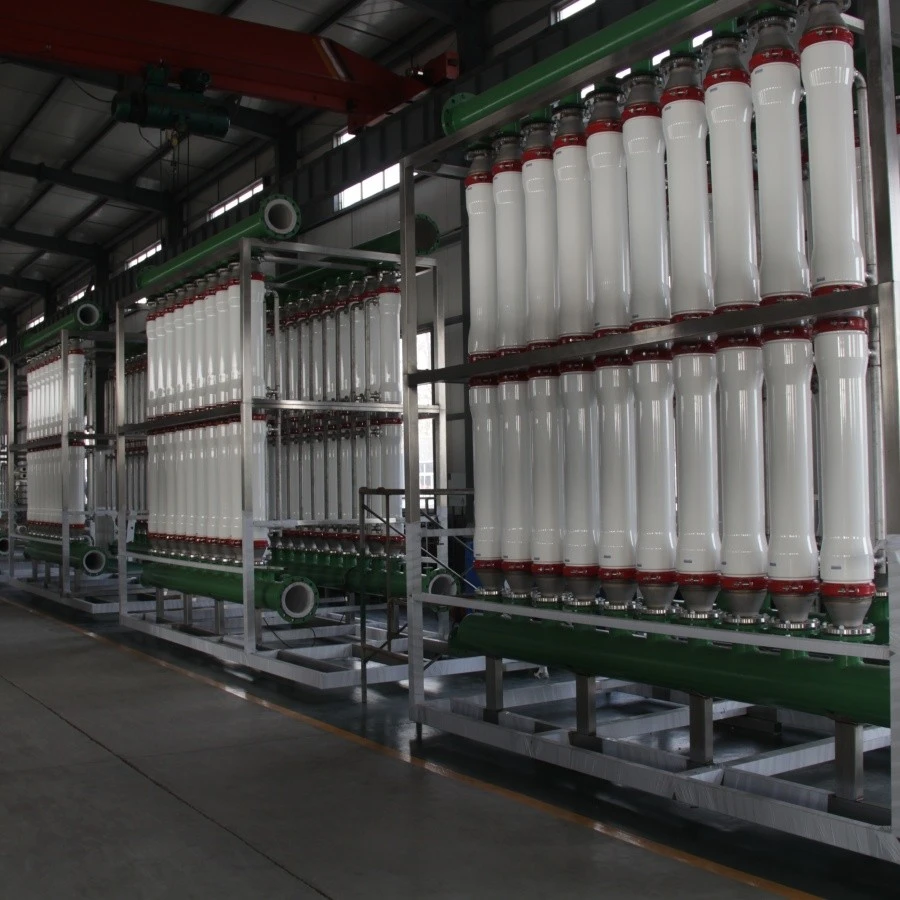

- Customized Cleaning Protocols: We develop customized cleaning protocols based on the specific requirements of our customers, including the feed characteristics, membrane type, and operating conditions.
- High-Quality Cleaning Agents: We provide high-quality cleaning agents that are specifically formulated for ultrafiltration membrane cleaning. Our cleaning agents are effective, environmentally friendly, and safe for use with different membrane materials.
- Technical Support: Our team of experts provides technical support to our customers, including on-site training, troubleshooting, and optimization of membrane regeneration processes.
Conclusion
Membrane regeneration is a critical aspect of ultrafiltration in the food industry. Effective membrane regeneration methods can help to maintain the performance and efficiency of ultrafiltration systems, reduce operating costs, and ensure the quality and safety of food products. As a leading supplier of Ultrafiltration in Food Industry, we are committed to providing our customers with the best solutions for membrane regeneration. If you are interested in learning more about our products and services, please contact us for a consultation. We look forward to working with you to achieve your ultrafiltration goals.
References
- Cheryan, M. (1998). Ultrafiltration and Microfiltration Handbook. Technomic Publishing Co., Inc.
- Field, R. W., Wu, D., Howell, J. A., & Gupta, B. (1995). Critical flux concept for microfiltration fouling. Journal of Membrane Science, 100(1-2), 1-12.
- Le-Clech, P., Chen, V., & Fane, A. G. (2006). Fouling in membrane bioreactors used in wastewater treatment. Journal of Membrane Science, 284(1-2), 17-53.
- Nghiem, L. D., Schäfer, A. I., & Elimelech, M. (2006). Chemical cleaning of forward osmosis membranes fouled by natural organic matter. Journal of Membrane Science, 283(1-2), 281-293.