

Hey there! As a supplier in the Ultrafiltration in Food Industry, I'm super stoked to dive into the world of membrane materials used in ultrafiltration for food processing. Ultrafiltration is a game - changer in the food industry, helping to separate, purify, and concentrate various food components. So, let's get right into it and explore the different membrane materials that make this technology work.
1. Polyethersulfone (PES)
Polyethersulfone is one of the most popular membrane materials in ultrafiltration for food processing. It's got some really cool features that make it a top choice. First off, PES membranes have excellent chemical resistance. They can handle a wide range of pH levels, from acidic to basic solutions. This means they can be used in various food processing applications, whether you're dealing with acidic fruit juices or alkaline dairy products.
Another great thing about PES is its thermal stability. It can withstand relatively high temperatures without losing its structural integrity. This is crucial in food processing, where heat treatments are often part of the production process. For example, when pasteurizing milk or other dairy products, the ultrafiltration membranes need to be able to handle the heat.
PES membranes also have good mechanical strength. They're less likely to break or tear during normal operation, which reduces the risk of product contamination. And they offer high flux rates, which means they can process a large volume of liquid in a relatively short time. This is essential for large - scale food production. If you're interested in learning more about how ultrafiltration with PES membranes can benefit your food business, check out our Ultrafiltration in Food Industry page.

2. Polyvinylidene Fluoride (PVDF)
PVDF is another widely used membrane material in ultrafiltration for food. It's known for its outstanding chemical resistance, even better than PES in some cases. PVDF can resist strong oxidizing agents and many organic solvents. This makes it suitable for applications where harsh cleaning agents are used to sanitize the ultrafiltration equipment.
One of the key advantages of PVDF is its hydrophobic nature. Hydrophobic membranes are less likely to foul with proteins and other organic substances commonly found in food products. Fouling is a major problem in ultrafiltration because it reduces the membrane's performance over time. With PVDF membranes, you can expect longer operational periods between cleanings, which saves time and money in the long run.
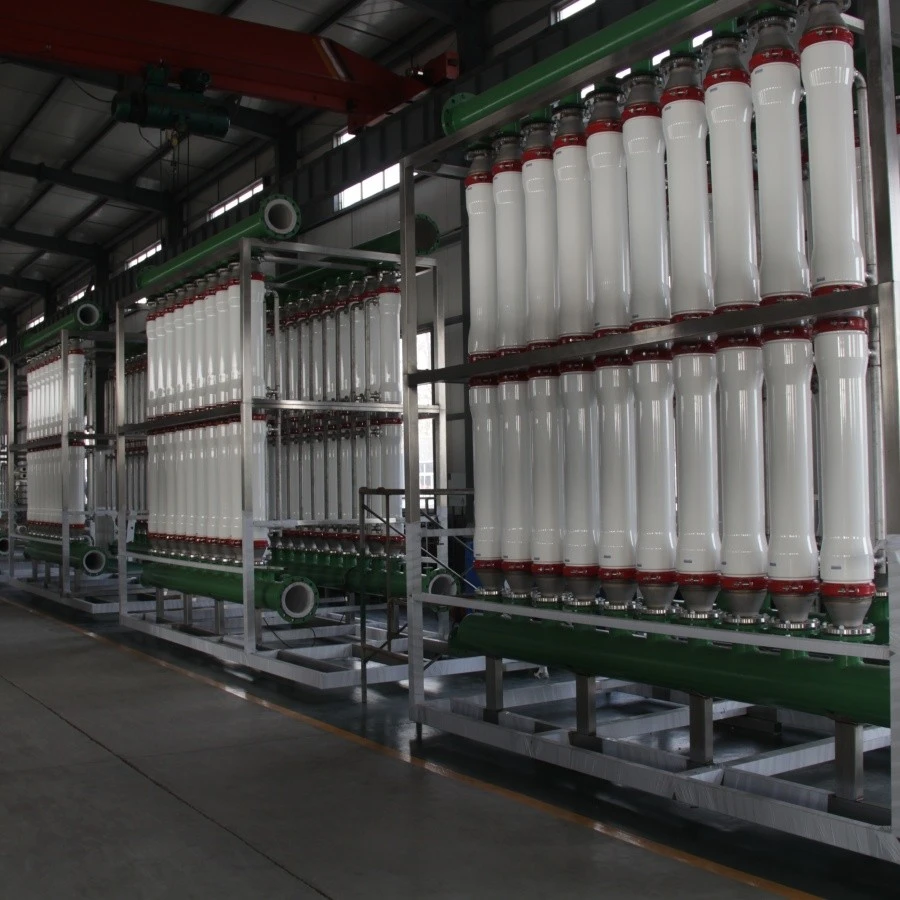
PVDF membranes also have good thermal stability and mechanical strength. They can be used in a variety of food processing operations, such as clarifying wine or filtering vegetable oils. And if you're in need of an industrial - scale ultrafiltration system that uses PVDF membranes, our Industrial Ultrafiltration Systems are designed to meet your needs.
3. Cellulose - based Membranes
Cellulose - based membranes, such as cellulose acetate and regenerated cellulose, have been used in ultrafiltration for a long time. They're biocompatible, which means they're safe to use in contact with food products. This is a big plus in the food industry, where consumer safety is of utmost importance.
These membranes have relatively small pore sizes, which makes them suitable for separating small molecules and particles. For example, they can be used to remove bacteria and other microorganisms from food and beverage products. Cellulose - based membranes also have good selectivity, which means they can separate different components in a mixture based on their size and charge.
However, cellulose - based membranes have some limitations. They're more sensitive to chemical and thermal conditions compared to PES and PVDF. They need to be used within a relatively narrow pH and temperature range. But in applications where mild conditions are maintained, they can be a great choice. And if you're dealing with reclaimed water treatment in your food processing plant, our Reclaimed Water Treatment solutions might involve cellulose - based membranes for effective filtration.
4. Ceramic Membranes
Ceramic membranes are becoming increasingly popular in ultrafiltration for food processing. They're made from inorganic materials, such as alumina, zirconia, or titania. One of the main advantages of ceramic membranes is their exceptional chemical and thermal stability. They can withstand extremely high temperatures and harsh chemical environments, making them suitable for applications where aggressive cleaning and sterilization procedures are required.
Ceramic membranes also have a long lifespan. They're very durable and can resist abrasion and corrosion. This reduces the need for frequent membrane replacement, which is a cost - effective solution in the long term. And they offer high flux rates and good selectivity, similar to some of the polymer - based membranes.
However, ceramic membranes are more expensive to manufacture compared to polymer membranes. But if you're running a large - scale food processing operation where reliability and long - term performance are crucial, the investment in ceramic membranes can be well worth it.
5. Polyacrylonitrile (PAN)
Polyacrylonitrile membranes are also used in ultrafiltration for food. They have good chemical resistance and are relatively easy to manufacture. PAN membranes can be tailored to have different pore sizes and surface properties, which makes them suitable for a variety of food processing applications.
They're often used for the separation of proteins and other macromolecules in food products. PAN membranes have a relatively high hydrophilicity, which means they can interact well with water and aqueous solutions. This can help to reduce fouling and improve the membrane's performance.
But like cellulose - based membranes, PAN membranes have some limitations. They're not as thermally stable as some of the other materials, and they may require careful handling to avoid damage.
Choosing the Right Membrane Material
When it comes to choosing the right membrane material for your food processing ultrafiltration needs, there are several factors to consider. First, you need to think about the nature of your food product. If you're dealing with a high - protein product, a membrane with good anti - fouling properties, like PVDF or PAN, might be a good choice. If your process involves high temperatures or harsh chemicals, ceramic or PES membranes could be more suitable.
You also need to consider the scale of your operation. For small - scale food production, a less expensive polymer - based membrane might be sufficient. But for large - scale operations, you may need to invest in more durable and high - performance membranes, like ceramic membranes.
Cost is another important factor. You need to balance the initial cost of the membrane with its long - term performance and maintenance requirements. And of course, you need to ensure that the membrane material is compliant with food safety regulations.
If you're still not sure which membrane material is right for your food processing application, don't hesitate to reach out to us. We're here to help you make an informed decision and provide you with the best ultrafiltration solutions for your business.
Why Choose Our Ultrafiltration Solutions
As a leading supplier in the Ultrafiltration in Food Industry, we have a wide range of ultrafiltration systems and membrane materials to meet your specific needs. Our systems are designed with the latest technology to ensure high performance, reliability, and efficiency.
We offer comprehensive support, from system design and installation to after - sales service and maintenance. Our team of experts has years of experience in the food industry and can provide you with customized solutions based on your unique requirements.
Whether you're a small - scale artisanal food producer or a large - scale industrial food manufacturer, we have the products and expertise to help you succeed. So, if you're interested in upgrading your food processing with ultrafiltration technology, or if you have any questions about membrane materials or our ultrafiltration systems, please get in touch with us. Let's start a conversation and see how we can work together to improve your food production process.
References
- Cheryan, M. (1998). Ultrafiltration and Microfiltration Handbook. Technomic Publishing.
- Mulder, M. (1996). Basic Principles of Membrane Technology. Kluwer Academic Publishers.
- Baker, R. W. (2012). Membrane Technology and Applications. Wiley.