

Reverse osmosis (RO) seawater desalination technology has emerged as a pivotal solution to the global water scarcity crisis, offering a reliable and efficient method for converting seawater into freshwater. At the heart of this technology lies the RO membrane, a critical component that determines the performance, efficiency, and cost - effectiveness of the desalination process. As a leading supplier of reverse osmosis seawater desalination systems, I am excited to delve into the materials that make these membranes possible.
Polyamide Thin - Film Composite (TFC) Membranes
Polyamide thin - film composite membranes are the most widely used materials in reverse osmosis seawater desalination. These membranes consist of a thin polyamide active layer supported by a porous substrate. The polyamide layer is typically formed through an interfacial polymerization process, where two monomers react at the interface between two immiscible solvents.
The polyamide active layer is responsible for the separation of salt and water. Its dense molecular structure allows water molecules to pass through while rejecting salt ions and other contaminants. The high selectivity of polyamide membranes is due to the presence of amide groups, which can form hydrogen bonds with water molecules, facilitating their passage through the membrane.
The porous substrate, usually made of polysulfone or polyethersulfone, provides mechanical support for the thin polyamide layer. It has a relatively open structure that allows water to flow through easily, while maintaining the integrity of the polyamide layer under high operating pressures.
One of the key advantages of polyamide TFC membranes is their high salt rejection rate. They can reject over 99% of dissolved salts in seawater, making them highly effective in producing freshwater. Additionally, these membranes have good chemical stability and can operate over a wide range of pH values. However, they are susceptible to fouling by organic matter, colloids, and microorganisms, which can reduce their performance over time. To mitigate fouling, pre - treatment processes such as filtration and disinfection are often employed.
Cellulose Acetate Membranes
Cellulose acetate membranes were among the first types of membranes used in reverse osmosis desalination. They are made from cellulose acetate polymers, which are derived from cellulose, a natural polymer found in plants.
Cellulose acetate membranes have a relatively simple structure compared to polyamide TFC membranes. They are homogeneous membranes, meaning that the entire membrane has a uniform composition. The separation mechanism in cellulose acetate membranes is based on the solution - diffusion model, where water molecules dissolve in the membrane material and then diffuse through it.
One of the advantages of cellulose acetate membranes is their relatively high resistance to chlorine, a common disinfectant used in water treatment. Chlorine can damage polyamide TFC membranes, but cellulose acetate membranes can tolerate low levels of chlorine, which simplifies the pre - treatment process.
However, cellulose acetate membranes have some limitations. They have a lower salt rejection rate compared to polyamide TFC membranes, typically around 95 - 98%. They also have a lower chemical stability and are more prone to hydrolysis at high temperatures and extreme pH values. As a result, their use in seawater desalination has become less common in recent years, although they are still used in some specific applications.
Inorganic Membranes
Inorganic membranes, such as ceramic and carbon membranes, are also being explored for reverse osmosis seawater desalination. These membranes offer several advantages over organic membranes, including high chemical and thermal stability, resistance to fouling, and long - term durability.
Ceramic membranes are typically made from metal oxides such as alumina, titania, or zirconia. They have a well - defined pore structure, which can be precisely controlled during the manufacturing process. The separation mechanism in ceramic membranes is based on size exclusion, where molecules and ions are separated based on their size.
Carbon membranes are made from carbonaceous materials, such as activated carbon or carbon nanotubes. They have a high specific surface area and can offer excellent separation performance. Carbon membranes can also be functionalized to improve their selectivity and permeability.
However, inorganic membranes also have some challenges. They are generally more expensive to manufacture compared to organic membranes, which limits their widespread use. Additionally, their brittleness can make them difficult to handle and install in large - scale desalination plants.
Hybrid Membranes
Hybrid membranes combine the advantages of different materials to achieve improved performance. For example, some hybrid membranes incorporate inorganic nanoparticles into a polymer matrix to enhance the membrane's mechanical, chemical, and separation properties.
These nanoparticles can act as fillers, improving the membrane's porosity, hydrophilicity, and fouling resistance. They can also provide additional active sites for water transport and salt rejection. Hybrid membranes are an area of active research, and they hold great promise for the future of reverse osmosis seawater desalination.
Our Offerings
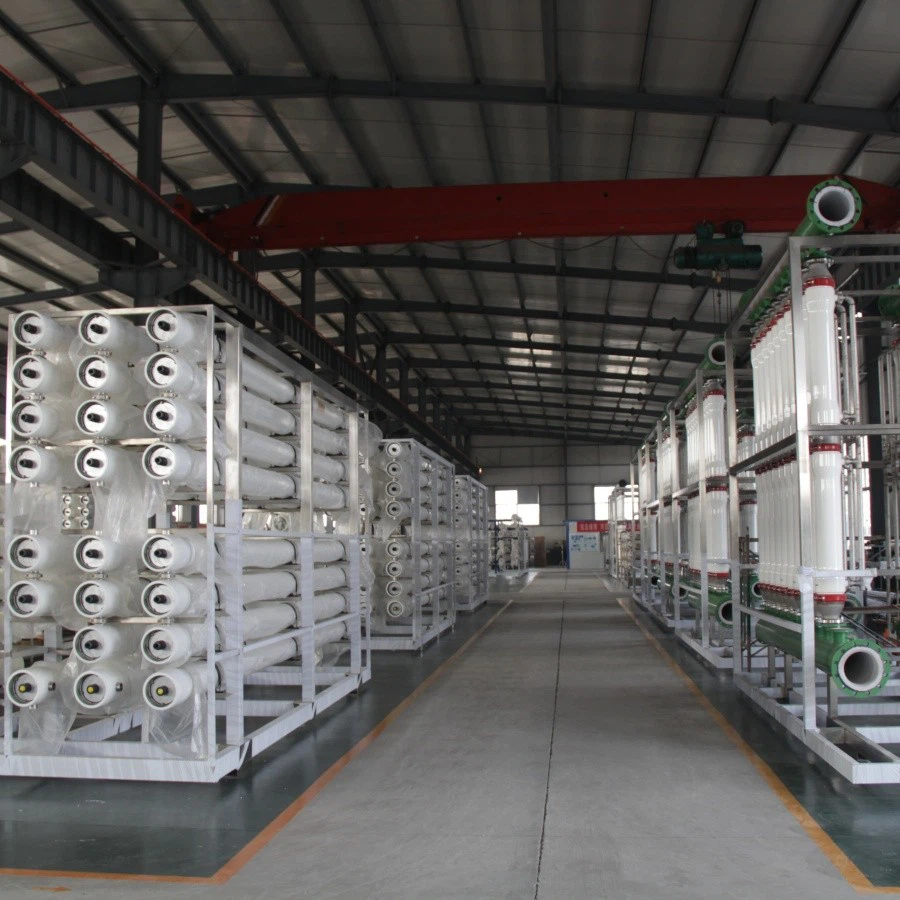
As a supplier of reverse osmosis seawater desalination systems, we offer a wide range of membranes made from different materials to meet the diverse needs of our customers. Our Industrial Reverse Osmosis System is designed for large - scale industrial applications, providing high - quality freshwater with high efficiency. Our Seawater Reverse Osmosis Desalination System is specifically tailored for seawater desalination, using advanced membrane technology to ensure maximum salt rejection and water production. And our Desalination RO System is a versatile solution that can be customized for different water sources and treatment requirements.
We understand that choosing the right membrane material is crucial for the success of your desalination project. Our team of experts can provide you with in - depth technical support and guidance to help you select the most suitable membrane for your specific needs. Whether you are looking for high - performance polyamide TFC membranes, chlorine - resistant cellulose acetate membranes, or innovative hybrid membranes, we have the solution for you.

Conclusion
The materials used in reverse osmosis seawater desalination membranes play a vital role in the efficiency and effectiveness of the desalination process. Polyamide thin - film composite membranes are currently the most widely used due to their high salt rejection rate and good chemical stability. However, cellulose acetate, inorganic, and hybrid membranes also offer unique advantages and are areas of ongoing research and development.
As a supplier, we are committed to providing our customers with the latest and most advanced membrane technology. If you are interested in learning more about our reverse osmosis seawater desalination systems or would like to discuss a potential project, please do not hesitate to contact us. We look forward to working with you to address your water treatment needs.
References
- Baker, R. W. (2004). Membrane Technology and Applications. Wiley.
- Mulder, M. (1996). Basic Principles of Membrane Technology. Kluwer Academic Publishers.
- Greenlee, L. F., Lawler, D. F., Freeman, B. D., Marrot, B., & Moulin, P. (2009). Reverse osmosis desalination: Water sources, technology, and today's challenges. Water Research, 43(9), 2317 - 2348.