

As a supplier specializing in reclaimed water treatment, I've witnessed firsthand the transformative power of membrane technology in this field. Reclaimed water treatment is crucial for addressing water scarcity, reducing environmental impact, and meeting the increasing demand for clean water. Membrane technology has emerged as a game - changer, offering numerous advantages that make it an ideal choice for reclaimed water treatment.
High - Quality Filtration
One of the most significant advantages of using membrane technology in reclaimed water treatment is its ability to provide high - quality filtration. Membranes act as a physical barrier, allowing only water molecules and small solutes to pass through while rejecting larger particles, microorganisms, and contaminants.
For instance, in a Ceramic Membrane Filtration System, the ceramic membranes have precise pore sizes. These can effectively remove suspended solids, bacteria, and even some viruses from the reclaimed water. This level of filtration ensures that the treated water meets strict quality standards, making it suitable for a variety of applications, from industrial processes to agricultural irrigation.
Compared to traditional treatment methods such as sedimentation and sand filtration, membrane technology offers a more consistent and reliable filtration performance. Traditional methods are often affected by factors like the quality of the incoming water and the operating conditions, which can lead to fluctuations in the treated water quality. In contrast, membrane filtration provides a more stable and predictable output, ensuring that the reclaimed water consistently meets the required specifications.
Energy Efficiency
Energy consumption is a major concern in reclaimed water treatment. Membrane technology has made significant strides in improving energy efficiency over the years. Modern membrane systems are designed to operate at relatively low pressures, reducing the energy required for water to pass through the membranes.
Industrial Ultrafiltration Systems are a prime example of energy - efficient membrane technology. These systems use advanced membrane materials and module designs to minimize the energy input while maintaining high filtration rates. Additionally, some membrane systems incorporate energy - recovery devices, which can capture and reuse the energy from the pressurized water, further reducing the overall energy consumption.
In comparison, traditional treatment processes such as reverse osmosis, which is also used for water purification, often require high pressures and large amounts of energy. Membrane technology offers a more energy - friendly alternative, making it a more sustainable choice for reclaimed water treatment, especially in regions where energy costs are high.
Compact Footprint
Space is often a limiting factor in reclaimed water treatment facilities, especially in urban areas where land is scarce. Membrane technology offers a significant advantage in terms of its compact footprint. Membrane systems can be designed to be highly modular, allowing them to be easily scaled up or down depending on the treatment capacity required.
A single membrane module can have a high filtration area, which means that a relatively small number of modules can achieve a large treatment capacity. This compact design reduces the amount of land and infrastructure needed for the treatment facility. For example, an Ultrafiltration Drinking Water System can be installed in a relatively small space, making it suitable for use in buildings, communities, or industrial sites with limited space availability.
In contrast, traditional treatment plants often require large areas for sedimentation tanks, clarifiers, and other treatment units. The compact nature of membrane systems not only saves space but also reduces the construction and maintenance costs associated with the treatment facility.
Easy Operation and Maintenance
Membrane technology is relatively easy to operate and maintain compared to traditional treatment methods. Modern membrane systems are equipped with advanced control systems that can monitor and adjust the operating parameters in real - time, ensuring optimal performance.
The maintenance requirements for membrane systems are also relatively straightforward. Regular cleaning procedures, such as backwashing and chemical cleaning, can effectively remove the fouling and contaminants that accumulate on the membrane surface, restoring the membrane's performance. Additionally, membrane modules can be easily replaced when they reach the end of their service life, minimizing downtime.
In traditional treatment plants, the operation and maintenance can be more complex. For example, sedimentation tanks require regular sludge removal, and sand filters need to be backwashed frequently. These processes are often labor - intensive and require a high level of expertise. Membrane technology simplifies the operation and maintenance process, reducing the workload and the potential for human error.
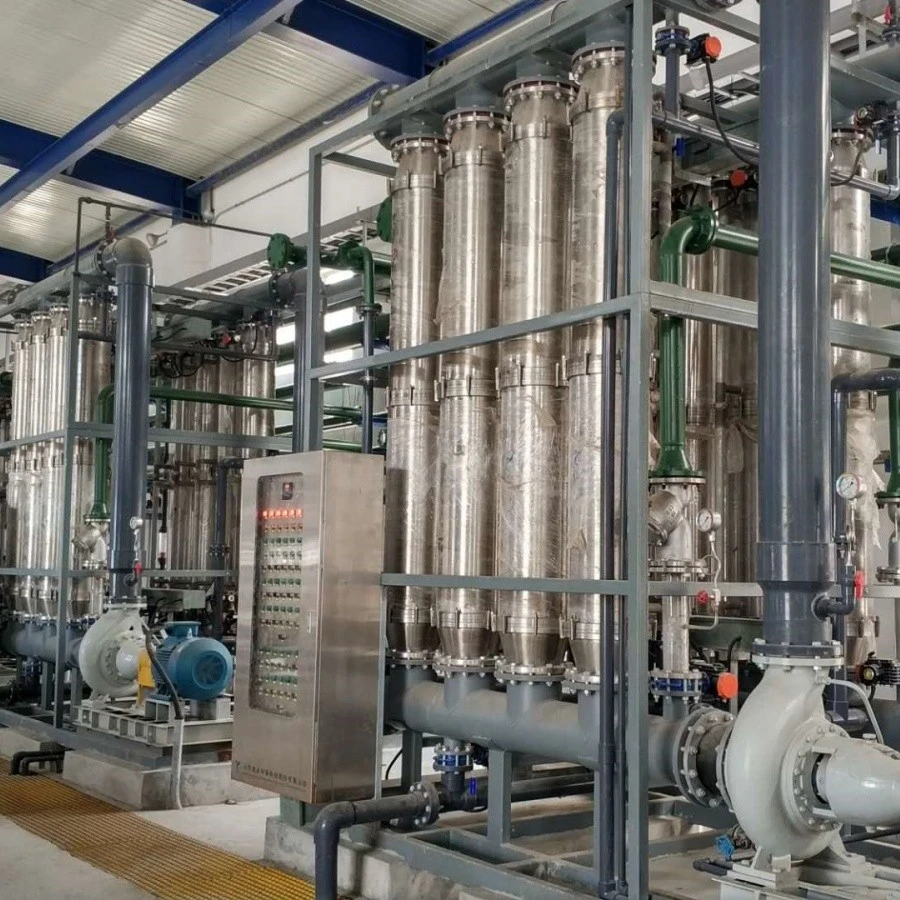

Adaptability to Different Water Sources
Reclaimed water can come from a variety of sources, including domestic sewage, industrial wastewater, and stormwater runoff. Each source has its own unique characteristics and contaminants. Membrane technology is highly adaptable to different water sources, making it a versatile solution for reclaimed water treatment.
Membranes with different pore sizes and properties can be selected based on the specific contaminants present in the water. For example, ultrafiltration membranes can be used to remove larger particles and microorganisms, while nanofiltration and reverse osmosis membranes can be used to remove smaller solutes and dissolved salts. This flexibility allows membrane systems to be customized to meet the specific treatment requirements of different water sources.
In contrast, traditional treatment methods may not be as effective in treating water from diverse sources. For example, a treatment plant designed for domestic sewage may not be able to handle industrial wastewater with high levels of heavy metals or organic pollutants. Membrane technology provides a more adaptable and comprehensive solution for reclaimed water treatment.
Environmental Sustainability
Using membrane technology in reclaimed water treatment contributes to environmental sustainability in several ways. Firstly, by treating and reusing reclaimed water, it reduces the demand for fresh water sources, conserving this precious resource. This is particularly important in regions facing water scarcity.
Secondly, membrane technology produces less sludge compared to traditional treatment methods. In traditional treatment plants, large amounts of sludge are generated during the sedimentation and clarification processes, which need to be disposed of properly. The disposal of sludge can be costly and can have environmental impacts, such as the release of greenhouse gases. Membrane systems generate less sludge, reducing the environmental burden associated with sludge disposal.
Moreover, the energy - efficient operation of membrane systems reduces the carbon footprint of the reclaimed water treatment process. By consuming less energy, membrane technology helps to reduce the emissions of greenhouse gases, contributing to a more sustainable environment.
Conclusion
In conclusion, membrane technology offers a wide range of advantages in reclaimed water treatment, including high - quality filtration, energy efficiency, compact footprint, easy operation and maintenance, adaptability to different water sources, and environmental sustainability. These benefits make it an ideal choice for meeting the growing demand for clean water and addressing the challenges of water scarcity.
If you are interested in incorporating membrane technology into your reclaimed water treatment project, we are here to help. Our team of experts can provide you with customized solutions based on your specific needs and requirements. Whether you need a small - scale system for a residential building or a large - scale industrial treatment plant, we have the experience and the technology to deliver a high - performance solution.
Contact us to start a discussion about your reclaimed water treatment needs and explore how our membrane technology can benefit your project. We look forward to working with you to achieve a more sustainable and water - efficient future.
References
- Cheryan, M. (1998). Ultrafiltration and Microfiltration Handbook. Technomic Publishing Company.
- Fane, A. G., Wang, R., & Waite, T. D. (2012). Membrane technology and applications. Elsevier.
- Rosenberg, M. (2009). Water Reuse: Issues, Technologies, and Applications. McGraw - Hill Professional.