

Ultrafiltration is a membrane - based separation process that has gained significant attention in various industries, including the food industry. As a supplier specializing in Ultrafiltration in Food Industry, I often get asked if ultrafiltration can be used for the concentration of food solutions. In this blog, I'll dig deep into this topic and share my insights.
How Ultrafiltration Works
First off, let's quickly understand how ultrafiltration works. It uses a semi - permeable membrane with pores of a specific size. When a food solution is passed through this membrane under pressure, smaller molecules like water, salts, and some low - molecular - weight compounds can pass through the pores, while larger molecules such as proteins, polysaccharides, and some flavor compounds are retained. This separation mechanism forms the basis for its potential use in concentrating food solutions.
Advantages of Using Ultrafiltration for Food Solution Concentration
One of the major perks of using ultrafiltration for food solution concentration is that it operates at relatively low temperatures. Unlike traditional evaporation methods that involve high - temperature processing, ultrafiltration helps preserve the heat - sensitive components in food solutions. For example, many vitamins and flavor compounds are heat - labile. By using ultrafiltration, we can avoid the degradation of these valuable components, thus maintaining the nutritional value and sensory quality of the food product.
Another advantage is its energy efficiency. Evaporation processes consume a large amount of energy to convert water into vapor. In contrast, ultrafiltration mainly relies on pressure to drive the separation, which generally requires less energy. This not only reduces the operational costs for food manufacturers but also makes it a more environmentally friendly option.
Ultrafiltration also offers a high degree of selectivity. The membrane can be chosen based on the specific size of the molecules we want to retain or remove. This allows for precise control over the concentration process, enabling us to concentrate the desired components while leaving out unwanted substances. For instance, in the dairy industry, ultrafiltration can be used to concentrate milk proteins while removing lactose and some minerals.
Applications in Different Food Sectors
Dairy Industry
In the dairy industry, ultrafiltration is widely used for the concentration of milk. It can increase the protein content of milk, which is essential for the production of cheese, yogurt, and other dairy products. By concentrating the milk using ultrafiltration, cheese makers can reduce the volume of milk needed and increase the yield of cheese. Moreover, the concentrated milk has a better texture and flavor, leading to higher - quality dairy products.
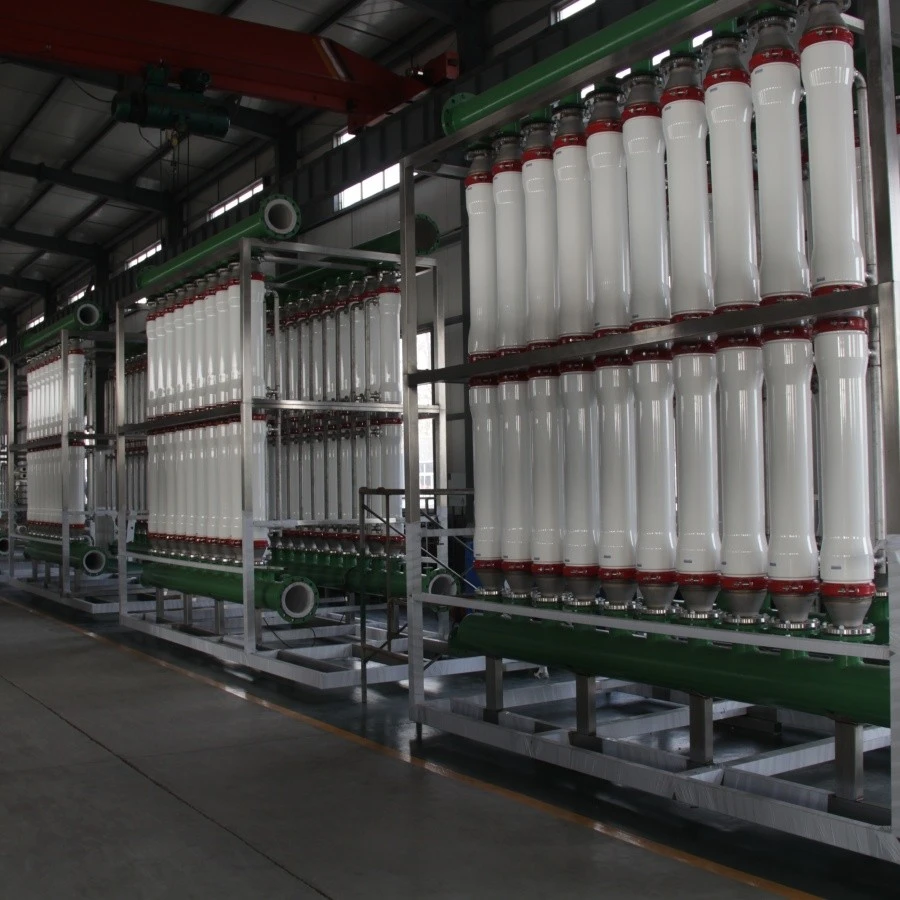

Fruit Juice Industry
Ultrafiltration is also valuable in the fruit juice industry. It can be used to concentrate fruit juices while retaining the natural flavors and nutrients. For example, when concentrating apple juice, ultrafiltration can remove water and some low - molecular - weight impurities, resulting in a more concentrated and flavorful juice. This concentrated juice can then be used as a base for various fruit - based beverages or as an ingredient in food products.
Beverage Industry
In the production of alcoholic and non - alcoholic beverages, ultrafiltration can play an important role in concentration. For beer, it can be used to remove some of the water and unwanted substances, such as haze - forming proteins, while concentrating the flavor compounds. In the case of tea and coffee extracts, ultrafiltration can help concentrate the active ingredients, like caffeine and antioxidants, without sacrificing the taste.
Challenges and Limitations
Despite its many advantages, ultrafiltration for food solution concentration also faces some challenges. One of the main issues is membrane fouling. Over time, the membrane can become clogged with the retained molecules, reducing its permeability and separation efficiency. This requires regular cleaning and maintenance of the membrane, which adds to the operational costs.
Another limitation is the initial investment cost. Setting up an ultrafiltration system can be quite expensive, especially for small - scale food producers. The cost of the membrane modules, pumps, and other equipment, along with the installation and commissioning, can be a significant barrier for some businesses.
Comparison with Other Concentration Methods
Let's compare ultrafiltration with other common concentration methods. As mentioned earlier, evaporation is a traditional method for food solution concentration. While it can achieve high levels of concentration, it has the drawbacks of high - temperature processing and high energy consumption. Reverse osmosis is another membrane - based method, but it typically has a smaller pore size than ultrafiltration. Reverse osmosis can remove even smaller molecules, but it also requires higher pressures and is more prone to membrane fouling.
Our Role as a Supplier
As a supplier of Ultrafiltration in Food Industry, we understand the challenges and opportunities in using ultrafiltration for food solution concentration. We offer a wide range of ultrafiltration systems tailored to different food applications. Our systems are designed with high - quality membranes that provide excellent separation performance and long - term stability.
We also provide comprehensive technical support to our customers. From system installation and commissioning to membrane cleaning and maintenance, our team of experts is always ready to assist. We work closely with food manufacturers to understand their specific needs and develop customized solutions.
In addition to food industry applications, our ultrafiltration technology also has applications in other fields. For example, our Reclaimed Water Treatment systems use similar membrane - based separation principles to treat wastewater and make it reusable. And our Ultrafiltration Drinking Water System can provide clean and safe drinking water by removing contaminants.
Conclusion
In conclusion, ultrafiltration can definitely be used for the concentration of food solutions. Its ability to preserve heat - sensitive components, energy efficiency, and selectivity make it a valuable tool in the food industry. Although there are some challenges such as membrane fouling and high initial investment, with the right technology and support, these issues can be effectively addressed.
If you're a food manufacturer looking for a reliable and efficient way to concentrate your food solutions, we'd love to have a chat. Our ultrafiltration systems can help you improve the quality of your products, reduce costs, and increase your competitiveness in the market. Don't hesitate to reach out to us for more information and to start a procurement discussion.
References
- Cheryan, M. (1998). Ultrafiltration and Microfiltration Handbook. Technomic Publishing Company.
- Heldman, D. R., & Hartel, R. W. (2015). Introduction to Food Process Engineering. Springer.
- Metzger, L. E., & Mistry, V. V. (2012). Dairy Processing and Quality Assurance. Wiley - Blackwell.