

► Systemic Challenges in Produced Water Treatment
In industrial production and resource extraction, the composition of generated wastewater is often extremely complex, containing high concentrations of suspended solids, emulsified oil, organic matter, and various chemical additives. Traditional single-stage treatment processes often fall short when facing such wastewater. Neither pure biochemical treatment nor conventional physical sedimentation can easily maintain long-term stable system operation while ensuring effluent compliance.
With the continuous raising of environmental standards and the increasingly stringent water quality requirements of production processes, the upgrading and renovation of existing treatment systems has become an industry consensus. A core issue currently concerning the engineering and technical community is how to guarantee the safety and effectiveness of downstream advanced treatment equipment under highly fluctuating influent conditions. In this context, the combined process route of "pretreatment + advanced treatment" has gradually highlighted its value, with ceramic membrane technology serving as a critical node in this pathway.
► Core Functions of Ceramic Membranes in the Pretreatment Stage
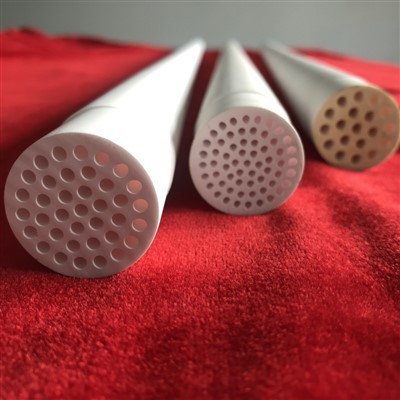
In modern water treatment architectures, the stability of the pretreatment stage directly determines the success or failure of the entire system. ceramic membranes for produced water treatment, by virtue of their high-temperature resistance, chemical corrosion resistance, and high mechanical strength, play an irreplaceable role in front-end filtration. Compared to organic membranes-which are susceptible to fouling and damage-ceramic membranes can directly treat raw water with higher oil content and impurity levels.
As an efficient ceramic membrane for oil water separation, it can effectively remove emulsified oil and fine suspended solids from wastewater through precise physical pore size interception. This high-efficiency interception capability not only improves sensory indicators but, more importantly, provides high-quality influent for subsequent desalination or advanced oxidation processes. Since ceramic membranes used for water treatment possess superior shock load resistance, they ensure constant product water quality even when influent quality fluctuates drastically, thereby acting as a "buffer" for system operation.
► Optimization of Downstream Load via Integrated Processes
The greatest significance of introducing ceramic ultrafiltration membrane into the pretreatment stage lies in significantly reducing the operational pressure on downstream advanced treatment equipment. In traditional treatment schemes, incomplete front-end filtration leads to frequent fouling of downstream reverse osmosis or nanofiltration membranes, which not only increases chemical cleaning costs but also shortens the service life of core components.
Through the "ceramic membrane + advanced treatment" combination, most substances prone to causing membrane fouling are thoroughly blocked at the front end. This allows downstream processes to operate under a more stable load, reducing the risk of frequent maintenance shutdowns. This "strict defense" at the front end makes the overall process flow smoother, significantly improving the system's water recovery rate and overall treatment efficiency.



Conclusion
The upgrade of a water treatment system is not a simple stacking of equipment, but rather an overall optimization of process logic. By placing ceramic membranes for produced water treatment at the core of the pretreatment stage, enterprises can address complex and volatile water quality challenges in a more robust manner. This integrated solution not only enhances the safety of the effluent but also saves significant consumables and maintenance costs for the enterprise in long-term operation.