

Hey there! As a supplier of Reverse Osmosis (RO) boiler feed water, I've seen firsthand how crucial it is to remove dissolved gases from boiler feed water before the reverse osmosis process. In this blog, I'll share some effective ways to do just that.
Why Remove Dissolved Gases?
Before we dive into the methods, let's quickly talk about why removing dissolved gases is so important. Dissolved gases like oxygen and carbon dioxide can cause a whole bunch of problems in a boiler system. Oxygen can lead to corrosion, which can damage the boiler and reduce its lifespan. Carbon dioxide can form carbonic acid when it dissolves in water, which can also cause corrosion and scale buildup. These issues not only affect the efficiency of the boiler but also increase maintenance costs and the risk of breakdowns.
Methods for Removing Dissolved Gases
1. Thermal Degasification
Thermal degasification is one of the most common methods used to remove dissolved gases from boiler feed water. The basic idea behind this method is simple: as water is heated, the solubility of gases in it decreases. So, by heating the water to a high temperature, we can drive out the dissolved gases.
Here's how it works. The boiler feed water is first heated to near its boiling point in a degasifier. As the water heats up, the dissolved gases are released as bubbles and rise to the surface of the water. These gases are then vented out of the degasifier. The degasifier usually has a tray or packing material inside to increase the surface area of the water, which helps in the release of the gases.
One of the advantages of thermal degasification is that it can remove a large amount of dissolved gases, especially oxygen. It's also relatively simple to operate and maintain. However, it does require a significant amount of energy to heat the water, which can increase operating costs.
2. Chemical Deoxygenation
Chemical deoxygenation involves adding chemicals to the boiler feed water to react with the dissolved oxygen and remove it. One of the most commonly used chemicals for this purpose is sodium sulfite (Na₂SO₃). When sodium sulfite is added to water, it reacts with oxygen to form sodium sulfate (Na₂SO₄).
The reaction is as follows:
2Na₂SO₃ + O₂ → 2Na₂SO₄
Another chemical that can be used is hydrazine (N₂H₄). Hydrazine reacts with oxygen to form nitrogen and water.
N₂H₄ + O₂ → N₂ + 2H₂O
Chemical deoxygenation is a cost - effective way to remove dissolved oxygen from boiler feed water. It can be easily controlled by adjusting the amount of chemical added. However, it's important to note that some of these chemicals can be toxic, so proper handling and disposal are necessary.
3. Membrane Degasification
Membrane degasification is a relatively new method for removing dissolved gases from water. It uses a semi - permeable membrane to separate the dissolved gases from the water. The membrane allows the gases to pass through but not the water.
The boiler feed water is passed through one side of the membrane, while a vacuum or a sweep gas is applied on the other side. The difference in partial pressure of the gases across the membrane causes the dissolved gases to diffuse through the membrane and be removed.
One of the advantages of membrane degasification is that it doesn't require any chemicals, which makes it an environmentally friendly option. It also has a relatively small footprint and can be easily integrated into existing RO systems. However, the membranes can be expensive, and they need to be replaced periodically.
Impact on Reverse Osmosis
Removing dissolved gases before reverse osmosis is essential for the proper functioning of the RO system. Dissolved gases can cause problems such as membrane fouling and reduced membrane lifespan. When gases are present in the feed water, they can form bubbles on the surface of the RO membrane, which can block the pores and reduce the flow of water through the membrane. This can lead to a decrease in the efficiency of the RO system and an increase in energy consumption.
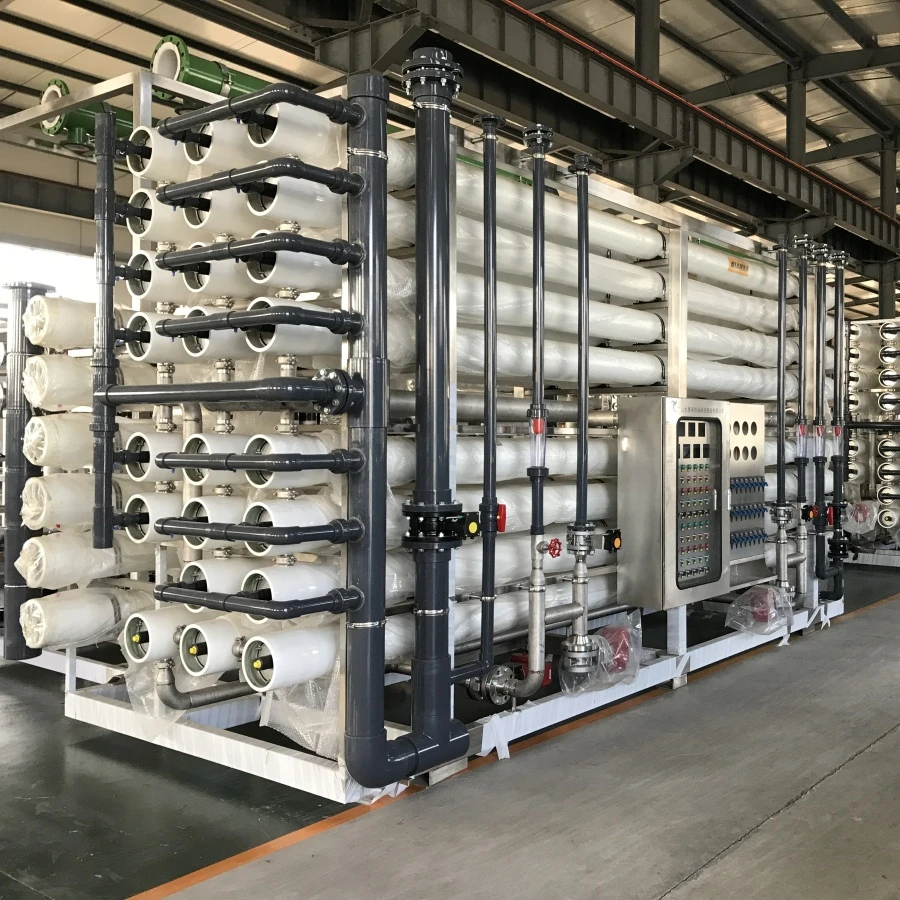

By removing the dissolved gases, we can ensure that the RO membrane operates at its optimal performance, which in turn can improve the quality of the boiler feed water produced by the RO system.
Our Solutions
As a Reverse Osmosis boiler feed water supplier, we offer a range of solutions to help you remove dissolved gases from your boiler feed water. We have Reverse Osmosis System for Boiler Feed Water that are designed to work in conjunction with different degasification methods. Whether you need a thermal degasifier, a chemical dosing system, or a membrane degasification unit, we can provide you with the right equipment and support.
We also have Seawater Reverse Osmosis System for those who are dealing with seawater as a source of boiler feed water. Seawater contains a high amount of dissolved gases, and our systems are specifically designed to handle this challenge.
In addition, our Semiconductor Reverse Osmosis System can be used in applications where high - purity water is required. These systems are equipped with advanced degasification technologies to ensure that the water meets the strict quality standards.
Conclusion
Removing dissolved gases from boiler feed water before reverse osmosis is a critical step in ensuring the efficient and reliable operation of your boiler system. By using the right degasification method and the appropriate RO system, you can improve the quality of your boiler feed water, reduce maintenance costs, and extend the lifespan of your equipment.
If you're interested in learning more about our products and how they can help you with your boiler feed water needs, don't hesitate to reach out. We're here to assist you in finding the best solution for your specific requirements. Let's have a chat and see how we can work together to optimize your boiler feed water treatment process.
References
- "Water Treatment for Boiler Systems" - A technical guide on boiler water treatment.
- "Handbook of Reverse Osmosis" - A comprehensive resource on reverse osmosis technology.
- "Chemical Deoxygenation in Boiler Systems" - Research paper on the use of chemicals for removing dissolved oxygen.