

As a core component of modern water treatment technology, industrial ultrafiltration systems play a vital role in numerous industrial sectors through their precise separation mechanisms. The success of this technology hinges on the construction of its core component-the separation device-and the pore size that determines its 'screening' precision.
The "Sieve" of Industrial Ultrafiltration Systems-The Core Lies in Pore Size
The fundamental working principle of ultrafiltration technology can be understood as a form of physical 'sieving' based on size. Under a certain pressure drive, water molecules and some small-molecule substances are allowed to pass through the membrane, while larger substances are retained.

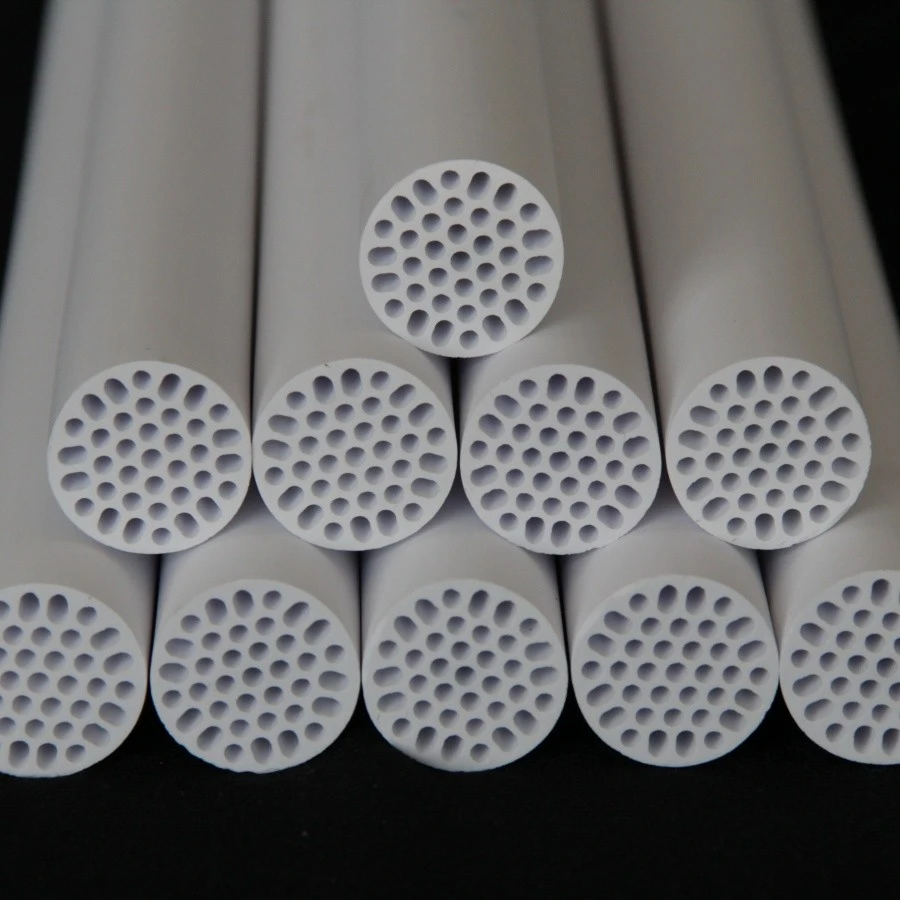
Pore Size Determines What is "Sieved"
The pore size of an ultrafiltration membrane is typically in the nanometer range, which enables it to effectively retain a variety of impurities in water. For instance, substances such as colloids, bacteria, viruses, large-molecule organics, and various types of suspended solids are effectively blocked on one side of the membrane because their sizes are larger than the membrane's pores. Concurrently, small-molecule substances like ions, salts, and minerals in the water can pass through smoothly, thus achieving the separation and purification of materials.
Uniformity is More Critical than the Nominal Value
However, the nominal pore size value alone does not fully represent the membrane's performance. The uniform distribution of pores is equally crucial. In our technological explorations, Taihe Environmental has found that resolving the agglomeration issue of nano-scale pores during the manufacturing process enables a uniform pore distribution, which is vital for ensuring stable and efficient filtration performance. A UF filtration system with a uniform pore distribution can prevent localized fouling, extend the membrane's service life, and guarantee the consistent stability of the product water quality.
The Carrier for the "Sieve"-A Diversity of Separation Devices
Ultrafiltration membranes must be housed in specific devices to function effectively. The structure and material of these devices directly impact the overall performance and application scope of the system.
Common Device Configurations
In industrial applications, separation devices come in various structural forms, including hollow-fiber, tubular, plate-and-frame, and spiral-wound configurations. Different structures are suited for different operating conditions; for example, certain configurations are better suited for treating raw water with high turbidity, while others can provide a larger filtration area within a compact space.
Material Innovation-The Advantages of Ceramic Membranes
In the selection of materials for separation devices, our company, Taihe Environmental, focuses on the research, development, and application of ceramic membrane technology, which represents a significant technological advancement in the field of industrial ultrafiltration. Compared to traditional organic membranes, the ceramic membranes we have developed exhibit superior physical and chemical stability, featuring resistance to high temperatures, acids, alkalis, and oil fouling. This gives them a distinct advantage when treating complex industrial wastewater. This robust and durable characteristic significantly enhances the service life and operating flux of the ultrafiltration equipment, thereby reducing long-term operational and maintenance costs.
Practical Applications and System Combinations
In practical applications, ultrafiltration systems rarely operate in isolation. For example, in the process of producing high-purity water, ultrafiltration often serves as a pre-treatment unit for reverse osmosis (RO), forming an efficient UF-RO system. By removing colloids and suspended solids from the water beforehand, it can greatly protect the more delicate downstream reverse osmosis membranes, thereby extending their service life.
In summary, an efficient industrial ultrafiltration systems is the product of a perfect combination of its precise pore size and a robust, durable separation device. Through continuous innovation in areas such as ceramic membrane materials and the control of their pore uniformity, Taihe Environmental is committed to providing more stable and efficient water treatment solutions for various industries.